







vc.web.local

twitter linkedinfacebookacp contact us

Oil and gas sector urged to implement ‘better technologies’ at ADIPEC

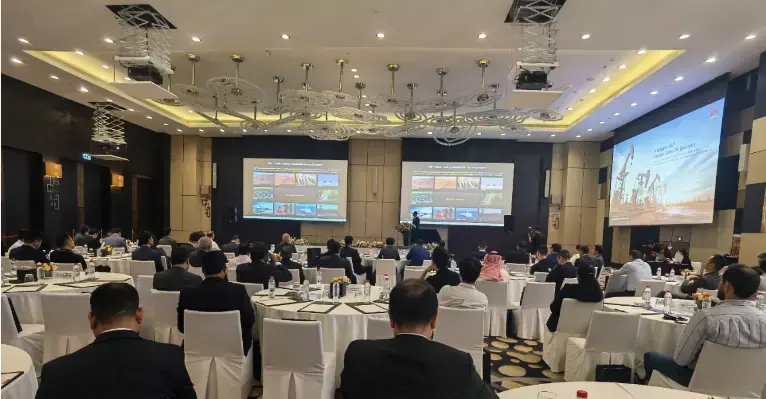
The 17th edition of ADIPEC has opened in Abu Dhabi with the focus this year on digitising the oilfield and conserving the future through the acceptance of technology

Held under the patronage of HH Sheikh Khalifa Bin Zayed Al Nahyan, President of the UAE and Ruler of Abu Dhabi, the opening ceremony saw speakers discuss the challenges and opportunities facing the oil and gas industry over the next 30 years.

Inaugurated by UAE National Security Adviser HH Sheikh Hazza Bin Zayed Al Nahyan, ADIPEC 2014 has been predicted to become the largest in the show’s history, with the four-day show hosting 18,000 exhibitors and 20 international pavilions.

Speakers over the four days of the event will include Sultan Ahmed Al Jaber, CEO - energy at Mubadala; Abdulla Naseer AlSuwaidi, director general of ADNOC; and Al Khalifa Al Shamsi, conference chairman of ADIPEC 2014, who will speak about ADIPEC’s journey since its first edition in 1984 and the role the event has played in shaping the oil and gas industry today.

UAE minister of energy HE Suhail Mohamed Al Mazrouei said that it was likely that ADIPEC had grown to become the world’s largest oil and gas conference gathering and the second largest oil and gas exhibition.

“The increasing number of participants indicate the importance of the event in linking the different oil and gas industry stakeholders together to discuss and exhibit the solutions to the challenges we face,” Al Mazrouei remarked.

Speaking on the first day of the event, theoretical physicist Michio Kaku said that the digitisation of oilfields would help save fuel resources.

“Oil and gas companies will have to adopt to technical enhancement for better production and efficient manpower,” he said, before providing various instances where technology could potentially go a long way to minimising risks in oilfields and for personnel.

Kaku said that in the future, technology would enable workers from oilfields in various countries to connect via a universal translator with the use of embedded contact lenses. Specially made for the oil and gas sector, the lenses would be able to show blueprints of oil or gas fields, as well as provide instructions and diagrams.

The Henry Semat Professor of Theoretical Physics at the City College of New York said that while many oil companies did not see as accessible upcoming technical advances, the future would see many firms use computerised wallpaper to access data.

Kaku theorised that while hydraulic fracking was an efficient way to release hydrocarbon from the ground, dangerous effects lie in the creation of earthquakes, citing examples from Texas and areas where hydraulic fracking is common place. In order to lessen the downside, he suggested that carbon dioxide be injected into the ground to release oil and gas. In this way, carbon dioxide released to the upper atmosphere could sent back to the ground and conservation could be achieved.

Kaku also said that increased instances of 3D modelling had helped engineers locate oil spills within the ground and advised more companies to accept this model in order to save fuel.

The opening ceremony of ADIPEC 2014 was followed by an international ministerial session attended by delegates from UAE, Kuwait, the UK and OPEC. The session covered the technologies needed by the oil and gas sector to fulfil the demands of the ever-increasing global population.

Al Mazrouei remarked, “The vision of UAE since the beginning was about looking into the future. We have forged partnership to express the development of the energy sector in the Middle East. In developing oil, we are also looking for more gas avenues, both for local consumption and exports.

“The challenge is to create local content or the workforce to help achieve additional targets.”

In regards to creating a larger local workforce in the country, Al Mazrouei said that Emiratis were playing an integral part in international companies, but added that he would like to see more local content created.

Kuwait’s minister of oil, Ali Saleh Al Omair, said, “Kuwait has many oil and gas projects in the pipeline, however, there is a need to educate and create engineers to actually come and work at our companies.”

Al Omair added that the recent drop in oil prices was not threatening, but it could lead to lower levels of investment and lower supplies of exports. He added that the country had been looking at downstream projects and was considering a shift towards the production of cleaner energy.
Top Stories

Grid List

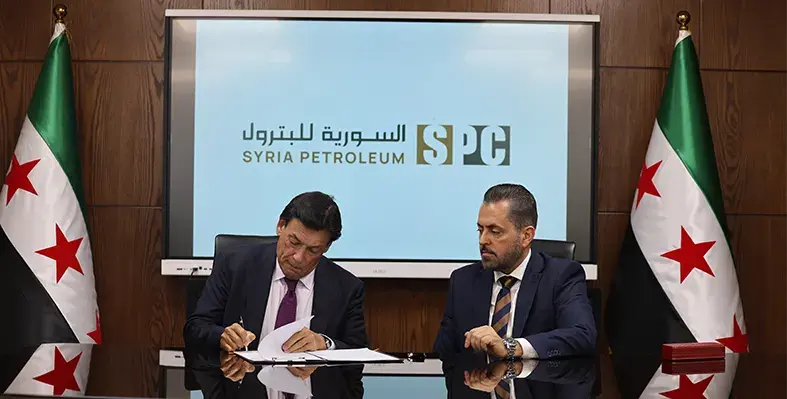
The signing of the MoU. (Image source: Dana Gas)

Exploration & Production

Dana Gas PJSC, the Middle East’s largest regional private sector natural gas company, has signed an agreement with the Syrian Petroleum Company (SPC) to explore the potential for the redevelopment and expansion of several natural gas fields across central Syria

The fields include the Abu Rabah gas field – one of the largest gas discoveries in Syria – as well as other SPC gas fields.

Dana Gas is the first developer to sign such an agreement. Under the terms of the agreement, Dana Gas will conduct a comprehensive technical assessment of the identified fields and propose a development plan aimed at significantly increasing total gas production if the evaluation is successful and both parties reach a final agreement. The initiative aims to support the government’s ambition to significantly boost national gas production, supporting Syria’s power generation and energy recovery.

Richard Hall, CEO of Dana Gas, said, “This agreement marks an important first step in evaluating opportunities to redevelop Syria’s gas infrastructure and unlock the potential that exists within its gas sector. The fields identified under this MoU could make a real difference to domestic gas production, strengthening Syria’s energy security and supporting local communities.

“Our confidence in taking on this challenge is two-fold: first, the professionalism and technical strength of the Syrian Petroleum team and second, our own proven development and operational expertise, most recently demonstrated through the early completion of the KM250 expansion project in Iraq alongside our joint operating partner. The lessons and capabilities we developed there are directly transferable to projects such as this, where hands-on execution, technical and financial discipline, and regional understanding are key to delivery. We are grateful to our Syrian counterparts for their trust and partnership as we embark on this effort.”

Dana Gas has exploration and production assets in Egypt, Kurdistan Region of Iraq (KRI) and UAE, with 2P reserves exceeding one billion boe and average production of 55,000 boepd in 2024. With sizeable assets in KRI and Egypt, and further plans for expansion, Dana Gas is playing an important role in the rapidly growing natural gas sector of the Middle East, North Africa and South Asia (MENASA) region.

Syria has the potential to significantly increase its oil and natural gas production. Before the civil war in 2011, it was self-sufficient in energy production, producing around 380,000-400,000 bpd of crude and 9 bcm of gas, with oil and gas sales accounting for around 20% of total revenues. However its infrastructure and refineries were damaged in the war, and the imposition of western sanctions, now partially lifted, along with the exit of oil majors from the country also took a toll on its production and refining capabilities. Crude production now stands at around 80,000-100,000 bpd.

IWCF is going live with four categories for Quality Assured. (Image source: IWFC)

Industry

With an aim to uphold the highest safety standards in the oil and gas sector, the International Well Control Forum (IWCF) has released an upgraded assurance framework, 'Quality Assured', for non-accredited training in well control

Zdenek Sehnal, CEO of IWCF, said, “Through Quality Assured, we’re committed to ensuring the highest standards in well control training, providing consistency and empowering professionals. This goes beyond compliance; it’s about giving the sector confidence in the training they are investing in and supports a culture of continuous development and accountability across the oil and gas industry, where well control incidents can have far reaching impact on life and reputation.”

The framework is comprised of nine standards, starting with course design and delivery to assessment, digital learning and on-the-job training. Each standard includes defined criteria that providers must meet to achieve Quality Assured status.

Quality Assured is backed by the insights of well control specialists coming together for knowledge sharing, promoting best practices and exploring the latest advancements in well control.

IWCF is going live with four categories for Quality Assured:

Well Control Specialist Topics, covering training programmes that address specific well control-related topics not covered under IWCF accreditation such as stuck pipe prevention and recovery, High Pressure High Temperature (HPHT), Well Integrity Management and Human Factors.

Operationally Embedded Training, with topics related to development programmes for drillers, supervisors, subsea engineers and intervention specialists.

Specialist Equipment for programmes focused on the use of specific well and well control related equipment such as any item that constitutes a well barrier, either temporary or permanent.

Continuous Learning Mechanisms for providers offering systems or tools that promote ongoing learning and assessment such as pre-course modules, pre-tests or digital platforms that allow candidates to reinforce their knowledge at any time.

Quality Assured has been applied by The Well Academy from The Netherlands. Director of Training at the centre, Jan Willem Flamma, said, “We were thoroughly impressed with the Quality Assured feedback from IWCF. The report on our Stuck Pipe Prevention & Recovery course went far beyond a simple evaluation, providing a true partnership in quality.

“The detailed strengths and constructive recommendations will be invaluable in helping us elevate our course materials and delivery, reinforcing our commitment to delivering high quality training and supporting continuous improvement for our learners.”

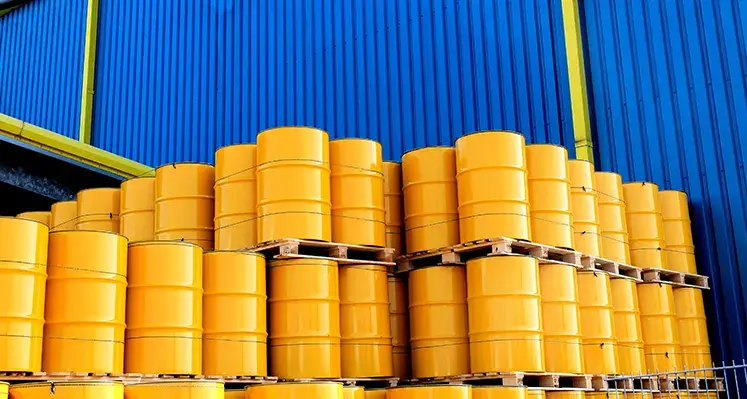
The agreement with strengthen Saudi Arabia's base oils sector. (Image source: Adobe Stock)

Petrochemicals

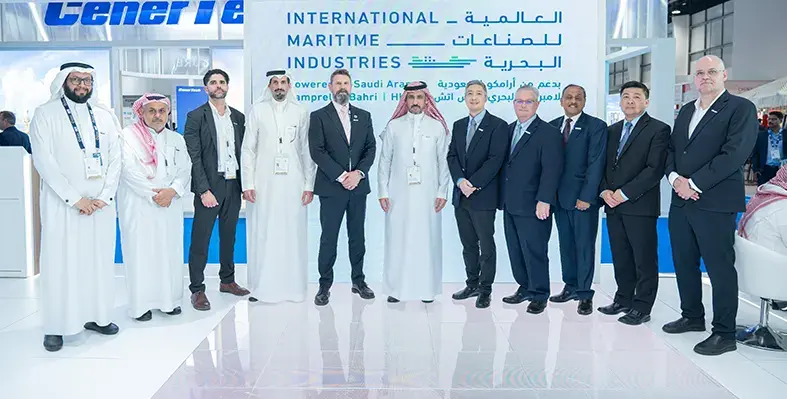
Bahri Chemicals, a subsidiary of logistics and transportation company Bahri, has signed a Contract of Affreightment (COA) with Luberef to strengthen Saudi Arabia’s base oil and petrochemicals sectors

Under the agreement, Bahri Chemicals will transport base oil produced in the kingdom from local ports to destinations across the Arabian Gulf and the west coast of India.

The strategic partnership will unlock synergies between the two companies, reflecting their shared commitment to advancing Saudi Arabia’s base oils sector, while also serving as an example of collaboration under the Saudi Inc. initiative, which strengthens partnerships and growth among Saudi companies.

Faisal Al Husseini, president of Bahri Chemicals, said, “This agreement with Luberef builds on our long-standing collaboration and reflects Bahri Chemicals’ commitment to delivering reliable, flexible, and customer-first maritime transportation solutions. Together with Luberef, we aim to create long-term value for our customers and contribute to the Kingdom’s economy.”

Eng. Samer A. Al-Hokail, President & CEO of Luberef, added, “This agreement represents another important step in our partnership with Bahri Chemicals toward enhancing the efficiency and resilience of our operations across international markets. We look forward to further strengthening our cooperation to deliver sustainable value to customers and to advance the Kingdom’s standing in the base oil sector.”

Luberef is one of the world’s leading suppliers of high-quality base oils, serving markets in Saudi Arabia and India, in addition to various markets across the Middle East and North Africa.

Bahri Chemicals is one of the largest owners and operators of chemical tankers in the Middle East, currently operating a fleet of 50 vessels, through which it provides maritime transportation services to a global customer base in the chemicals, clean petroleum products, and vegetable oils sectors.

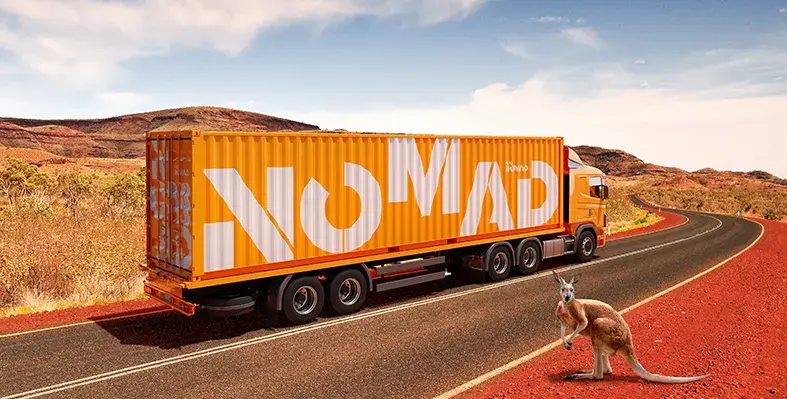
DUG Nomad is designed tomake HPC and AI inference accessible wherever data is needed. (Image source: DUG)

Technology

Across the Middle East, oil and gas operators are acquiring larger seismic surveys, using more advanced imaging algorithms and streaming more field data than ever before

Yet as these workflows intensify, it is becoming increasingly difficult to rely solely on distant, centralised data centres. Moving any amount of big data to the cloud, be it terabytes or petabytes, introduces latency risk and bandwidth bottlenecks, while off-premise storage of subsurface data raises security and sovereign vulnerabilities. Operators now face a critical challenge: how to get powerful compute where the data resides, not hundreds or thousands of kilometres away.

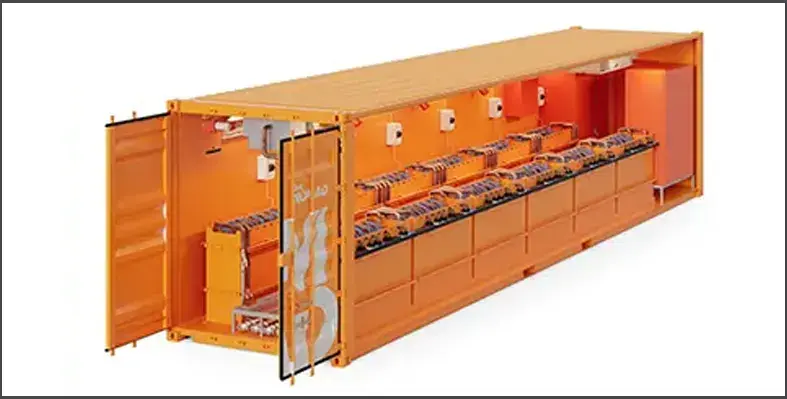
That is where DUG Nomad comes in – a deploy-anywhere, ultra-dense edge-computing solution designed to make high performance computing (HPC) and AI inference accessible wherever data is generated.

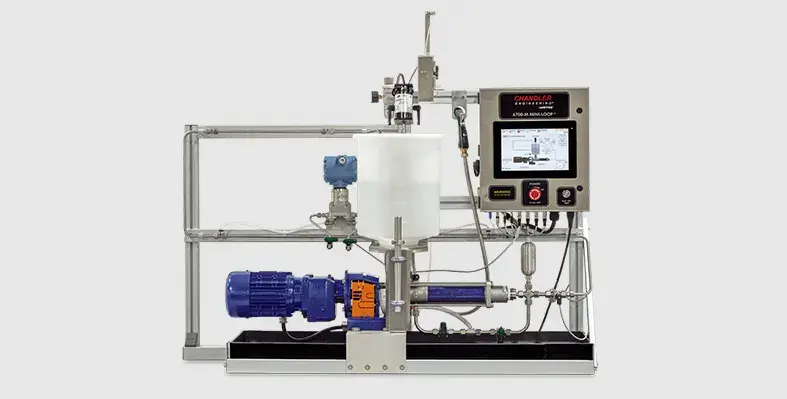
Available in 10-foot and 40-foot containerised models, DUG Nomad brings the power of a full-scale data centre directly to the field. The compact Nomad 10 delivers 80 kW of cooling and supports more than 100 NVIDIA H200 GPUs, with self-contained cooling that requires no external chillers, plumbing or site preparation. It goes from delivery to operation in just hours.

dug n40 p01 studio open cam c v02The recently introduced Nomad 40 takes this further, providing up to 1 megawatt of IT heat rejection and supporting more than 1,000 NVIDIA H200 GPUs or 92,000 CPU cores in a mobile, modular form. Both systems are engineered to operate in any environment – including the hot, arid conditions common across the Middle East – thanks to the integrated immersion-cooling system that shields hardware from dust and oxidation. This makes Nomad uniquely capable of delivering scalable compute power on demand in places where traditional air-cooled systems often struggle with efficiency and reliability.

“Organisations increasingly need the power of a data centre without being bolted down to one location,” said Harry McHugh, DUG chief information officer. “Nomad gives them that flexibility – the ability to deploy serious computing capability at the edge, in days rather than months, with exceptional energy efficiency.”

For operators across the region, DUG Nomad offers more than mobility. By processing data on-site, it optimises data sovereignty, confidentiality and speed, ensuring that critical and sensitive information never leaves the operational perimeter while reducing latency for real-time analysis.
With its new Abu Dhabi office supporting large-scale projects across the region, DUG is uniquely positioned to help clients harness the benefits of edge computing – bringing HPC and AI inference closer to where insights begin.

The webinar will transform confined space inspections. (Image source: Flyability)

Webinar

Despite advances in digital technology, many oil and gas sites across the Middle East still rely on manual entry for tank and vessel inspections, resulting in days of downtime, high scaffolding costs and risk to human life

What if you could change all that with drone technology?

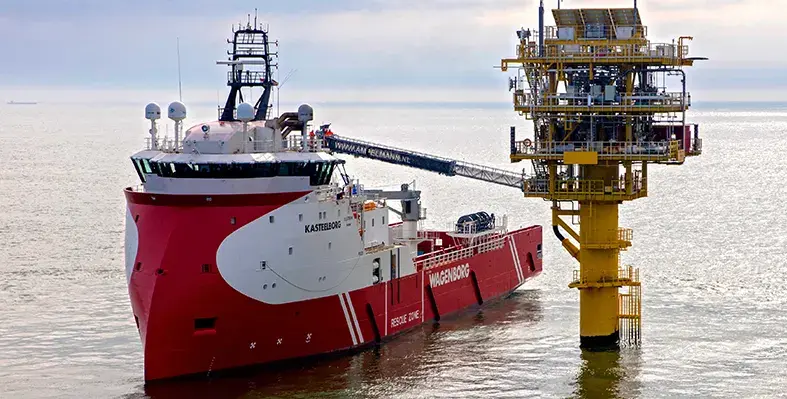
Inspections drones such as the Elios 3 are revolutionising the world of confined space inspections, improving safety, reducing downtime and enhancing operational efficiency.

Join us for an exclusive live webinar hosted by Flyability in association with Oil Review Middle East on ‘Transforming oil and gas operations with the Elios 3 drone’ on Tuesday 2 September at 2pm GST. Industrial experts will explain how drones such as the Elios 3 are transforming confined space inspections, and how you can integrate this technology into your operations seamlessly.
Key highlights:

Drone integration: learn how to safety and effectively implement drones in confined space
Safety and training: understand essential safety protocols and training strategies for your team
ROI: discover how to measure and achieve a strong return on investment with drone technology
Real world use cases: hear from the engineers using drone tech in the field on the impact Elios 3 is having on in oil and gas inspections.

Speakers and host:

Fabio Fata – senior sales manager, Flyability (moderator)
Eralp Koltuk – inspection lead engineer, Tüpraş
Danijel Jovanovic – director of operations, ZainTECH

Take your operations to the next level! Don’t miss out on gaining valuable insights into how drones can make inspections safer, faster and smarter .

From making inspections in hazardous confined spaces much safer to streamlining the whole process and providing valuable real-time data, you will get to see exactly how the Elios 3 is changing the game.

Register for the free webinar here.

Methane emissions reporting is improving, but more action is needed to reduce emissions. (Image source: Adobe Stock)

Energy Transition

Government and industry responses to UN Environment Programme (UNEP) satellite methane alerts rose from 1% to 12% cent in the past year, and oil and gas methane emissions reporting has improved, but action needs to accelerate to achieve the Global Methane Pledge goal of curbing methane emissions 30% by 2030, according to a new UNEP report

Atmospheric methane continues to be the second biggest driver of climate change after carbon dioxide, responsible for about one-third of the planet’s warming, and real-world data is a critical tool to track and reduce methane emissions.

The fifth edition of the UN Environment Programme’s (UNEP) International Methane Emissions Observatory (IMEO) publication, An Eye on Methane: From measurement to momentum, finds that member oil and gas companies of IMEO’s Oil and Gas Methane Partnership 2.0 (OGMP 2.0) are set to track one-third of emissions from global production using real-world measurements. The OGMP 2.0 is the world’s global standard for methane emissions measurement and mitigation in the oil and gas sector. Over the past five years, OGMP 2.0 membership has more than doubled to 153 companies in the countries, covering 42% of global oil and gas production.

One-third of global oil and gas production reports, or will soon report, emissions at OGMP 2.0’s Gold Standard – meaning emissions are tracked with real-world measurements. This positions a large amount of the global industry to effectively measure – and thus mitigate – emissions. One of the companies achieving 'Gold Standard reporting' in 2024 for having effectively achieved the highest levels of data quality is Eni. OGMP 2.0’s 2025 report recognized Eni for its continued progress, including identifying and quantifying emissions across non-operated assets, as well as training and technical assistance on the LDAR (Leak Detection and Repair) approach to fugitive emissions. LDAR training sessions were organised with the support of UNEP and delivered to National Oil Company (NOC) personnel.

The report highlights that while government and company responses to alerts from IMEO’s Methane Alert and Response System (MARS) have grown tenfold over the previous year, nearly 90% remain unanswered, necessitating an increase in response rates. Through MARS, UNEP has sent over 3,500 alerts about major emissions events across 33 countries. These alerts are based on satellite monitoring and artificial intelligence-supported analysis. IMEO has documented 25 cases of mitigation action in ten countries since MARS was launched in 2022, including across six new countries during the past year.

“Reducing methane emissions can quickly bend the curve on global warming, buying more time for long-term decarbonisation efforts, so it is encouraging that data-driven tools are helping the oil and gas industry to report on their emissions and set ambitious mitigation targets,” said Inger Andersen, executive director of UNEP. “But to keep the Paris Agreement targets within reach, the important progress on reporting must translate into cuts to emissions. Every company should join the Oil and Gas Methane Partnership 2.0, and both governments and operators must respond to satellite alerts – then they must act to reduce emissions.”