





cc.web.local

twitter linkedinfacebookacp contact us

The project will combine the recognised OBN expertise of both parties to deliver an unparalleled subsurface dataset for Egypt and international exploration partners. (Image courtsey of EGAS)

Image courtesy of EGAS

Viridien and SLB have entered into an agreement with the Egyptian Natural Gas Holding Company (EGAS) to launch a major multi-client ocean bottom node (OBN) seismic acquisition and imaging programme in Egypt’s Eastern Mediterranean offshore

The largest project of its kind in the region, it will combine the recognised OBN expertise of both parties to deliver an unparalleled subsurface dataset for Egypt and international exploration partners, which will be available through a multi-client model. Data acquisition is scheduled to begin in the first quarter of 2026.

The project will give explorers and investors a clearer understanding of the region’s complex subsurface and help them identify new opportunities for exploration and enhanced production, as the country looks to boost production and decrease its reliance on imported fuel. The gpvernment is actively addressing policies to support an encouraging work environment for global investors,with a view to accelerating oil exploration and production rates, and there have been some encouraging new discoveries recently.

Mahmoud Abdel Hamid, chairman of EGAS, said: “The Egyptian Eastern Mediterranean has great potential for development but features some of the most challenging environments for seismic imaging owing to the complex faulting and the Messinian evaporite layer that masks deep reservoirs formed from complex channel sand bodies. We are pleased to work with our partners, Viridien and SLB, who have decades of specialised imaging expertise in the region and will apply their cutting-edge technologies to deliver the clearest insight into the subsurface to help operators better evaluate and prioritise opportunities.”

Dechun Lin, head of Earth Data, Viridien, said: “This agreement with SLB and EGAS marks a significant milestone for Viridien, giving new momentum to our commitment to Egypt as a key partner with over 30 years of in-country operating experience. Expanding our multi-client data library into the Egyptian Eastern Mediterranean with our advanced OBN imaging technologies will help showcase Egypt’s subsurface opportunities to the world.”

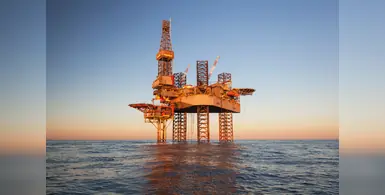
The consortium will explore in Block 8, offshore Lebanon. (Image source Adobe Stock)

The Lebanese government has signed an agreement with an international consortium for exploration in Block 8 offshore Lebanon

The consortium, consisting of operator TotalEnergies (35%) with its partners Eni (35%) and QatarEnergy (30%), have signed an agreement with the Lebanese government to enter Block 8 exploration permit offshore Lebanon. Block 8 is located about 70 km off the southern coast of Lebanon in water depths of approximately 1,700-2,100 m. 

TotalEnergies and Eni were several years ago involved in a consortium with Russia’s Novotek to explore in two blocks in the Mediterranean sea, but this was unsuccessful, with the maritime border dispute with Israel (now resolved) impeding progress in one of the blocks. Qatar Energy partnered with TotalEnergies and Eni in early 2023 to explore blocks 4 and 9, marking its first exploration venture in Lebanon. However, exploration in Block 9 has not been successful.

The first step in the consortium’s work on Block 8 will be the acquisition of a 1,200 sq. km 3D seismic survey, in order to further assess the area's exploration potential.

“Although the drilling of the well Qana 31/1 on Block 9 did not give positive results, we remain committed to pursue our exploration activities in Lebanon. We will now focus our efforts on Block 8, together with our partners Eni and QatarEnergy and in close cooperation with Lebanese authorities,” said Patrick Pouyanné, chairman and CEO of TotalEnergies.

His Excellency Mr. Saad Sherida Al-Kaabi, Qatar's Minister of State for Energy Affairs, the president and CEO of QatarEnergy, said, “We are pleased to secure this exploration block, which allows us to support the development of Lebanon’s upstream oil and gas sector reflecting and reaffirming the State of Qatar’s ongoing commitment towards a brighter future for Lebanon and its people.”

Lebanon’s Ministry of Energy and Water, in cooperation with the Petroleum Administration, is reported to be working on reforms to modernise licensing procedures, in advance of the launch of a fourth licensing round. The government is keen to encourage further international exploration and development to revive the country’s oil and gas sector and aid the recovery of the country’s ailing economy. Lebanon recently signed an agreement with Egypt for the supply of Egyptian gas to ease its chronic power shortages, and also signed a maritime gas zone agreement with Cyprus, opening the way for further exploration and development and the unlocking of Lebanon’s undoubted offshore potential.

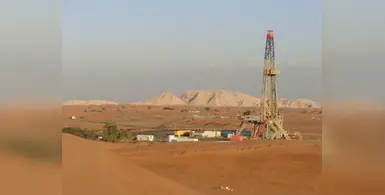
Libya has managed to significantly increase production. (Image source: Adobe Stock)

Libya’s NOC has achieved its highest average crude oil production rate in a decade, according to recent NOC figures

With an aim to advance transparency, the National Oil Corporation (NOC) of Libya has released its average daily crude oil production and total (cumulative) production statistics for the past 10 years. 

According to the table released, 2025 has recorded the highest average production rate in comparison to the last decade, at 1.374 million barrels per day. Total crude oil production for the year reached 501 million barrels, marking a positive shift in the NOC’s strategy to boost crude oil production rates. The NOC acknowledged the role of the employees at all production sites.

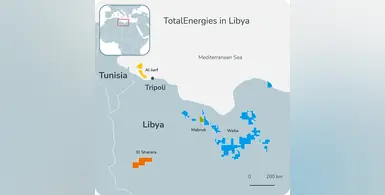
Majors have showed increased interest in the region throughout 2025. TotalEnergies had kickstarted work on the Waha and Sharara fields, while also exploring opportunities in the Sirte and Murzuq basins.

Speaking about the region, the company's senior vice president for the Middle East and North Africa, Julien Pouget, said, “With 40% of Africa’s reserves, Libya remains largely untapped.” 
Repsol, too, has resumed drilling in Murzuq Basin onshore Libya. Lauding the region's efforts in fighting natural field decline and encouraging exploration, Repsol's executive managing director, exploration & production, Francisco Gea showed faith in achieving the country's production target of two million barrels per day. 

Eni is set to launch three exploration plays in the region – shallow, deepwater and ultra-deep offshore, and is also deeply invested in Libyan gas with the US$10bn Greenstream pipeline and a CO2 capture and storage plant in Mellitah.

While bp and Shell both signed exploration agreements with NOC last year to assess exploration opportunities.

Libya’s latest upstream licensing round launched in March 2025, the first in 18 years, has attracted more than 40 bids, signalling growing international interest in its largely untapped hydrocarbon potential.

The bid round, launched in March 2025, offers 22 blocks for exploration and development (11 Offshore and 11 Onshore) including areas with undeveloped discoveries estimated to contain a minimum of 2.0 Bboe in hydrocarbon resources.

At the Libya Energy & Economic Summit 2025 last year, Bashir Garea, technical advisor to the chairman of the NOC, said the country has 48 billion barrels of discovered but unexploited oil, with total potential estimated at 90 billion barrels, especially offshore, adding that Libya also has 122 trillion cubic feet of gas yet to be developed. More investment and new technology is needed to unlock this potential, he said.

Richard Hall, CEO of Dana Gas. (Image source: Dana Gas)

Dana Gas PJSC, the Middle East’s largest regional private sector natural gas company, has received a US$50mn payment from the Egyptian Government, supporting its ongoing drilling programme in Egypt

The payment significantly reduces overdue receivables and supports the drilling programme under the Consolidation Agreement with the Egyptian Government, which was formally signed in December 2024. The agreement consolidated Dana Gas’s concessions in Egypt and provided improved fiscal terms to support new upstream investment, while also including additional acreage designated for exploration drilling.

Since the programme commenced, Dana Gas has drilled four wells, including the recent North El-Basant 1 discovery, which is estimated to hold 15 bcf of recoverable gas. These wells successfully added 18 mmscfd of production and a material increase in reserves. The company plans to drill seven further wells under the programme in 2026, with the next – the Daffodil exploration well – expected to spud in January. The 11-well programme will save over US$1bn by displacing imported LNG and fuel oil with domestic production. Egypt is heavily reliant on imported fuel, recently concluding major LNG and gas supply deals with Israel and Qatar, having seen domestic production decline in recent years. 

Dana Gas has also completed a workover programme across three wells, adding an additional 9mmscfd of production. Further assessments are underway to identify additional workover prospects for 2026.

Richard Hall, CEO, Dana Gas, said, “We are grateful to the Ministry of Petroleum and Mineral Resources, the Egyptian General Petroleum Corporation and the Egyptian Natural Gas Holding Company for their continued support. This latest payment, which will help fund our investment programme in Egypt, acknowledges the importance of timely payments to ensuring the successful delivery of our drilling programme.“Thanks to the robust support provided by the Egyptian government, our investment program is already yielding positive outcomes. We have successfully brought new gas production online, and additional wells are scheduled to follow. With the right support in place, we’re well positioned to deliver the next phases of the programme and continue strengthening Egypt’s role as a regional gas hub.”


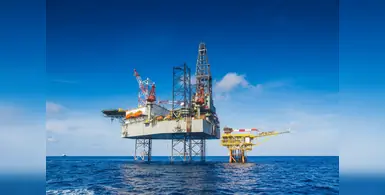
The activities will be supported by Saipem's construction vessels.

As part of an existing long-term agreement with Aramco, Saipem has announced two new offshore contracts in Saudi Arabia, known as Contract Release Purchase Orders (CRPO) 

A 32-month contract called CRPO 162 will encompass the engineering procurement construction and Installation (EPCI) of approximately 34 km of pipeline, with diameters of 20” and 30", and related works on topside structures at the Berri and Abu Safah oil fields.

The second contract (CRPO 165), on the other hand, will be spanning a period of 12 months, comprising subsea interventions at Marjan field and the EPC of 300 m of onshore pipeline and associated tie-ins.

The activities will be supported by Saipem's construction vessels, which have already been deployed in the region. With a special focus on local content, the company will be conducting its fabrication activities at its Saudi fabrication yard, Saipem Taqa Al-Rushaid Fabricators Co. Ltd., in Dammam.

The award of these new contracts strengthens Saipem’s presence in Saudi Arabia and further consolidates its longstanding relationship with Aramco.

More Articles …