vb

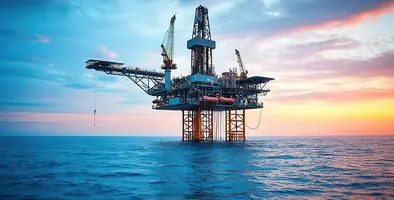
Oil and gas operations in the Middle East span harsh deserts, sprawling refineries and high-risk offshore environments. (Image source: Adobe Stock)

In the oil and gas industry, where every second counts and every decision impacts profitability and safety, robust security is not just a luxury – it's a necessity

From protecting critical assets to safeguarding human lives, security systems must meet the highest standards of reliability and performance.

Pelco, a leader in video security, is uniquely positioned to address the challenges faced by oil and gas companies in the Middle East, offering a fresh perspective on how to optimise security systems seamlessly. With our upcoming online event, we invite you to explore how Pelco can help tackle worker safety, asset protection and operational efficiency in this complex industry.

Addressing oil and gas challenges head-on

Oil and gas operations in the Middle East span harsh deserts, sprawling refineries and high-risk offshore environments. Physical, environmental and digital threats are converging, and security systems must evolve to meet these overlapping demands. Our upcoming online event will focus on three critical areas where Pelco's expertise can make a difference:

1. Improve worker safety and HSE compliance

Ensuring worker safety is both a moral responsibility and a regulatory imperative. Health, Safety and Environmental (HSE) compliance is a top priority for oil and gas operations. Pelco's advanced portfolio is designed to help you meet these standards.

Edge-based analytics and intelligent video security can be valuable tools in supporting site safety. These systems can help detect safety incidents, such as slips or falls, especially in areas where oily surfaces, heat or dust create additional hazards. When incidents occur in remote areas, automated detection can prompt faster intervention, thereby closing the gap between the event and the response.

Personal Protective Equipment (PPE) compliance is another key safety concern. High temperatures in the Middle East can lead to discomfort, and in some cases, workers may be tempted to remove protective gear, such as hard hats or vests, for temporary relief. In this case, AI-enabled video analytics can help identify instances of non-compliance, enabling safety teams to address the issue before it becomes a liability.

Zone-based behavioural analytics can help detect when someone enters a restricted or hazardous area or remains in a dangerous zone longer than necessary. For example, loitering detection near flare stacks or storage tanks can support situational awareness and proactive incident mitigation.

2. Improve security and asset protection

From refineries in the desert to offshore rigs in corrosive marine environments, your assets operate under pressure, so your security systems must withstand these harsh conditions. In areas where explosive gases or dust particles may be present, even basic equipment can pose risks. That’s why choosing video solutions built for hazardous environments is critical.

ExSite Enhanced cameras, featuring 316L stainless steel construction and certifications such as ATEX and IECEx, are designed for use in hazardous atmospheres. Whether it’s observing pipeline manifolds, wellheads or chemical storage areas, these systems deliver dependable performance in high-risk environments. In corrosive coastal locations, such as LNG terminals or offshore rigs, Pelco’s anti-corrosion models withstand salt spray, humidity and chemical exposure without compromising visibility.

For perimeter defence, long-range Silent Sentinel cameras give security teams early warning of approaching threats, detecting vehicles, vessels or drones from kilometres away in fog, darkness or dust. These systems are especially valuable for remote desert pipelines or unstaffed offshore installations, where rapid detection is critical to prevent disruptions.

3. Minimise downtime and maximise uptime

Every minute of downtime impacts revenue. For oil and gas operations, the cost of unplanned outages is measured in millions of dollars. With Pelco, your video security can become an operational asset.
Radiometric thermal cameras can detect overheating in transformers, compressors and electrical panels, allowing teams to take action before equipment failure occurs. At the same time, Pelco’s camera image health analytics help ensure your video infrastructure is always performing at its best. Our cameras automatically detect issues such as lens obstructions, misalignment or tampering, reducing the need for manual inspections and helping ensure your security coverage is always clear, optimised and ready when it matters most.

Join us to discover the Pelco advantage

We invite you to join our upcoming online event, where industry leaders and Pelco experts will dive deeper into these challenges and solutions. Together, we'll explore how Pelco can be the missing ingredient to supercharge your security and drive operational excellence in the Middle East oil and gas sector.

Don't miss this opportunity to gain actionable insights and position your operations for success. Register now and discover how Pelco can transform your approach to security.

The webinar will transform confined space inspections. (Image source: Flyability)

Despite advances in digital technology, many oil and gas sites across the Middle East still rely on manual entry for tank and vessel inspections, resulting in days of downtime, high scaffolding costs and risk to human life

What if you could change all that with drone technology?

Inspections drones such as the Elios 3 are revolutionising the world of confined space inspections, improving safety, reducing downtime and enhancing operational efficiency.

Join us for an exclusive live webinar hosted by Flyability in association with Oil Review Middle East on ‘Transforming oil and gas operations with the Elios 3 drone’ on Tuesday 2 September at 2pm GST. Industrial experts will explain how drones such as the Elios 3 are transforming confined space inspections, and how you can integrate this technology into your operations seamlessly.

Key highlights:

Drone integration: learn how to safety and effectively implement drones in confined space
Safety and training: understand essential safety protocols and training strategies for your team
ROI: discover how to measure and achieve a strong return on investment with drone technology
Real world use cases: hear from the engineers using drone tech in the field on the impact Elios 3 is having on in oil and gas inspections.

Speakers and host:

Fabio Fata – senior sales manager, Flyability (moderator)
Eralp Koltuk – inspection lead engineer, Tüpraş
Danijel Jovanovic – director of operations, ZainTECH

Take your operations to the next level! Don’t miss out on gaining valuable insights into how drones can make inspections safer, faster and smarter .

From making inspections in hazardous confined spaces much safer to streamlining the whole process and providing valuable real-time data, you will get to see exactly how the Elios 3 is changing the game.

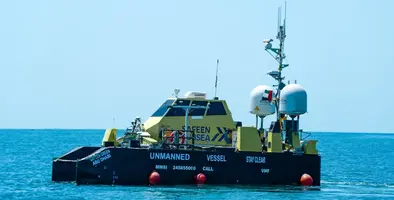
The webinar highlighted SAFEEN Green - a revolutionary new USV. (Image source: AD Ports Group)

Oil Review Middle East hosted a very well-attended webinar on 20 November on the future of offshore operations, in association with SAFEEN Group, part of AD Ports Group

The webinar explored the latest trends and challenges in the rapidly evolving world of offshore operations, focusing on groundbreaking innovations that are driving sustainable and efficient practices. In particular, it highlighted SAFEEN Green – a revolutionary unmanned surface vessel (USV), setting new benchmarks for sustainable and efficient maritime operations.

Erik Tonne, MD and head of Market Analysis at Clarksons, gave an overview of the offshore market, highlighting that current oil price levels are supportive for offshore developments, and global offshore capex is increasing strongly. The Middle East region will see significant capex increase over the coming years, with the need for rigs and vessels likely to remain high. Offshore wind is also seeing increased spending. Global rig activity is growing, while the subsea EPC backlog has never been higher, with regional EPC contracts seeing very high activity. Tonne forecast that demand for subsea vessels and other support vessels will continue to increase.

Tareq Abdulla Al Marzooqi, CEO SAFEEN Subsea, AD Ports Group, introduced SAFEEN Subsea, a joint venture with NMDC, which offers reliable and innovative survey, subsea and offshore solutions to support major offshore and EPC projects across the region. He highlighted the company’s commitment to sustainability, internationalisation and local content, and how it is a hub for innovations and new ideas, taking conceptual designs and converting them to commercial projects. A key project is SAFEEN Green, which offers an optimised inspection and survey solution.

Tareq Al Marzooqi and Ronald J Kraft, CTO, Sovereign Global Solutions ME and RC Dock Engineering BV. outlined the benefits and capabilities of SAFEEN Green as compared with commercial vessels, in terms of safety, efficiency, profitability and sustainability. It is 30-40% more efficient through the use of advanced technologies, provides a safer working environment given it is operated 24/7 remotely from a control centre, and offers swappable payload capacity. Vessels are containerised and can be transported easily to other regions. In terms of fuel consumption, the vessel is environment-friendly and highly competitive, reducing emissions by 90% compared with conventional vessels, with the ability to operate on 100% biofuel.

As for future plans, SAFEEN Green 2.0 is under development, which will be capable of carrying two inspection work-class ROVs simultaneously. A priority will be to collect data to create functional AI models for vessels and operations, with the first agent-controlled payload systems in prospect by around 2027.

To view the webinar, go to https://alaincharles.zoom.us/rec/share/mNHjZhAhQzn1sPzmFWZCgrq7_SckfLRcSb4w81I7aVlokO9sgHM_zVeOqgN3DgJS.bO4OIRqNeFP09SPu?startTime=1732095689000


The webinar explored how AI surveillance applications can enhance operational efficiency and improve standards in onshore and offshore operations. (Image source: Adobe Stock)

A very well attended webinar hosted by Oil Review Middle East in October, in association with industry leaders Convergint and Axis Communications, explored how AI surveillance applications can enhance operational efficiency and improve safety standards in onshore and offshore operations

At this webinar, the second in a series addressing AI video analytics transformative applications for oil and gas operations, Saif Al-Shahrani, KSA country director, Convergint, and Andrea Monteleone, segment development manager, Critical Infrastructure – EMEA at Axis Communications explored the transformative impact of adopting cutting-edge AI-driven video analytics and surveillance technologies on onshore and offshore operations.

Valuable insights

They provided valuable insights into the current and complex landscape of the oil and gas sector, which necessitate advanced safety and security measures, discussing the unique challenges faced by both system integrators and manufacturers. Key points included the operational challenges in remote and high-risk environments, the importance of compliance with regulations, and the integration of new technologies such as AI, IoT, and cybersecurity. The potential of AI in improving safety, security, and operational efficiency was underscored, with a focus on real-time detection and automated response systems. The proactive monitoring capabilities of video analytics were highlighted, emphasising the importance of understanding and preventing dangerous behaviours or conditions. AI can for example monitor and learn from behaviours, allowing for early detection and prevention of injuries or disruptions. The technology can raise alarms or send audio messages to prevent dangerous situations, enhancing safety and efficiency.

The speakers delved into how AI surveillance applications are enhancing operational efficiency, improving safety standards, and providing real-time insights crucial for decision-making in this high-stakes industry. Video analytics were highlighted for enhancing situational awareness and proactive threat detection.

Additionally, the webinar covered the importance of choosing the right types of cameras and aligning them with video analytics to meet specific operational objectives, and how to integrate these technologies into a centralised, multi-layered system that maximises the benefits of video analytics, all while ensuring seamless integration and optimal performance. Best practices for integration and system design include comprehensive site assessments, optimal camera placement, and ensuring compatibility with existing systems. Regular maintenance, updates, and continuous learning models are essential for optimal performance and cybersecurity.

To watch the webinar recording, click here.

The webinar covered the latest advancements in industrial analytics tools. (Image source: Adobe Stock)

On 12 November 2024, Oil Review Middle East hosted a dataPARC webinar on ‘Beyond ProcessBook & PI Vision: Exploring Today’s Industrial Analytics Tools’

In today's era of Manufacturing 4.0, industrial organisations have access to more data than ever before, unlocking potential for higher production rates, improved quality, and cost efficiency through data-driven strategies.

However, choosing the right tools to capitalise on this data can be challenging, especially with the evolving landscape of long-standing tools such as OSIsoft's ProcessBook and PI Vision.

The webinar covered the latest advancements in industrial analytics tools and how they are shaping the future of process optimisation right across the enterprise. dataPARC experts provided critical insights into the booming growth of generative AI, machine learning, and new solutions to help businesses transition smoothly from legacy systems to cutting-edge technologies. Also discussed was dataPARC’s approach to industrial analytics, and the specifics of the dataPARC platform. Helpful advice was given on migrating and conversion from legacy systems. Finally, a practical demonstration was given of dataPARC’s capabilities.

dataPARC is designed for high-speed data performance at the plant and enterprise levels allowing you to connect, collect, and combine data from any source. dataPARC’s industry-leading data visualisation tool, PARCview, can quickly analyse large sets of data and identify opportunities to improve process efficiency. The complete data analytics and historian suite of dataPARC gives operators, engineers, and management real-time insights into current operating conditions with dashboards, notifications and displays to monitor equipment status, site-level process flows, and enterprise-wide production KPIs.

You can view the webinar at https://alaincharles.zoom.us/rec/share/zqrnbKO8PusUfd6Yne9iTOss4iDE5KPzP31Ug_J-FNrpZVsoCCNj7I2tHJIWZxY.znRorcIM9rzhVj0J

More Articles …

Page 2 of 5