








John Kim, senior director of product and design for Avigilon at Motorola Solutions, discusses how access credentialing can improve physical security in hazardous zones, as part of a layered, scalable security solution
The oil and gas industry faces a unique challenge in increased risks to workers due to the number of hazardous zones on-site. While managers and supervisors prioritise employee safety and security, threats persist, including unauthorised access to high-risk areas that can compromise employees' health and safety.
As industry operations expand in the Middle East to meet global energy demands, new challenges are emerging in mitigating health and safety incidents in hazardous zones. Where communication is imperative to operational efficiency, physical security measures can be a fundamental element in minimising disruptions to daily business.
Protecting workers from harm in hazardous areas is an integral part of worksite safety, including only allowing authorised personnel who are trained and equipped to undertake tasks in specific locations. Access credentialing can be an effective measure in mitigating accidents in these high-risk zones.
Health and safety in hazardous zones
Operational safety in the Middle Eastern oil and gas sectors has improved significantly over the last few years. However, data analysed by artificial intelligence (AI) has revealed that the majority of industry accidents occur due to inadequate supervision, poor risk assessment, lack of awareness and incorrect work procedures.
While more rigorous health and safety protocols and regular training programs can help mitigate the risk of harm, the industry's rapid growth makes implementing such measures challenging. Organisations worldwide continue to expand their operations, adding new staff, facilities and equipment to meet the substantial global energy demand predicted over the next couple of decades, requiring leaders to consider new solutions to enhance on-site physical security.
Focusing on preventive rather than reactive measures can be a powerful strategy for improving physical security in hazardous zones. Ensuring only those with a proven understanding of risks, awareness and protocols have authorisation to enter areas that can compromise their health and safety.
Protecting workers with access credentials
Modern access credentials can be a crucial element in protecting workers during significant expansion phases in the oil and gas industry. They go beyond the traditional badge system, simplifying access while providing more robust measures to ensure only authorised personnel can enter hazardous areas.
Implementing access credential systems that leverage verification methods can help limit access to authorised personnel only. These include mobile credentials, biometric scanners, personal identification numbers and encrypted keycards, all of which support remote management from security platforms.
The advanced access control systems allow security teams to grant or revoke access swiftly, while having detailed security logs to understand employee movement and allow quicker, more accurate action in the event of an incident. In the oil and gas industry, where timely response is vital to maintaining health and safety standards, access credentials can not only help shape a preventive physical security strategy but also enhance reactive measures.
Improving physical security for high-risk areas
The typical definition of hazardous zones on oil and gas rigs is areas where the atmosphere is explosive, with various levels of risk ranging from lower hazards (zone 2) to extreme caution (zone 0). Each zone requires varied health and safety measures to help protect employees from potential accidents and injuries.
Integrating access credentials can help enhance physical security by granting authorisation based on the zone number, allowing only personnel with the necessary skills and knowledge to enter the area. An example is only permitting trained employees into zone 0 areas, such as tankers, where there is a considerable risk of explosion due to the storage of flammable liquids.
Using the access credential system to ensure authorised employees have the right equipment and certifications can help mitigate accidents and injuries, maintaining operational efficiency on worksites.
Furthermore, the technology can play an integral role in shaping an effective overall physical security strategy for oil and gas industry facilities.
Implementing layered physical security strategies
Access credentials for oil and gas facilities can be a valuable tool for addressing some of the industry's leading causes of accidents and injuries. However, they can be part of a comprehensive strategy to improve overall physical security, helping maintain operational efficiency and maximising productivity.
The ongoing demand for energy production in the Middle East means oil and gas organisations will need to scale up to meet quotas. Alongside that growth come new physical security challenges and obstacles that require adaptive solutions.
Industry leaders in the region already enjoy a high level of operational readiness to meet the challenges ahead. Combining access control systems with video security cameras, smart detection sensors and data analytics platforms can help secure that reputation, shaping a layered, scalable solution that ensures hazardous zones remain safe and businesses are productive.
How access credentialing improves physical security in hazardous zones
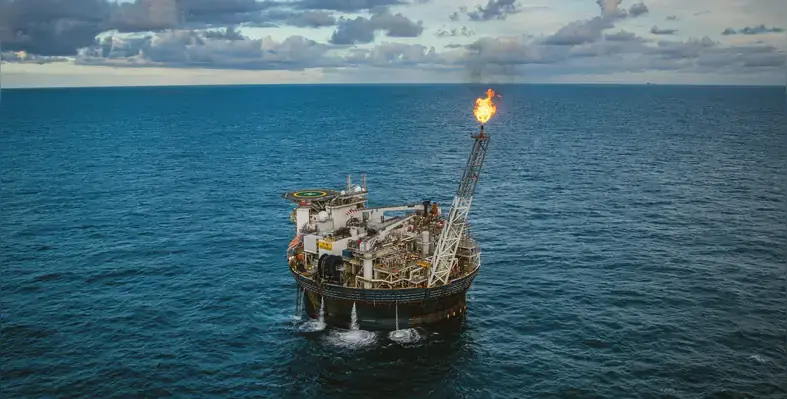
New challenges are emerging in mitigating health and safety incidents in hazardous zones. (Image source: Avigilon)