









BOP (blow-out preventer) valves play a safety-critical role in stopping the uncontrolled release of hydrocarbons from a well. However, the size and complexity of conventional BOP systems can constrain operations in environments where space is limited
Unity, the global well integrity and decommissioning specialist, has addressed this issue head-on with the development of a revolutionary ultra-compact blowout preventer (BOP) valve, named Unity Qb (‘cube’). Measuring just one-third the width of conventional systems, the new design enables safe intervention in confined environments previously inaccessible to standard BOP equipment, opening new possibilities across wireline, slickline, coil tubing and future drilling applications.
How does Unity Qb differ from conventional BOPs?
Conventional BOPs are placed at the top of a well and are large and cross-shaped by design, which limits where on a platform they can be positioned. In the event of a hydrocarbon leak, they seal or shear using rams that move in a straight line, clamping in from opposite sides of the well bore. In contrast, Unity Qb’s rams rotate around a central cartridge within the housing, making this proprietary technology a hybrid between a conventional BOP and a ball valve. It performs all conventional BOP functions in a fraction of the space and opens up the possibility of installing a BOP where historically only a Shear-Seal Ball Valve could fit.
The recently patented solution is rated to 10,000 psi, twice the pressure rating of Unity's existing compact shear (CSS) Valve and other traditional systems, while weighing the same. The higher rating means Unity Qb can be deployed on higher-pressure wells that lower-rated equipment cannot service. It is also stackable in single, dual or triple configurations.
Gary Smart, CEO at Unity said, “The future of well intervention will be defined by technologies that deliver more capability from a smaller footprint - Unity Qb represents exactly that step-change. Our engineering team reimagined the design from the ground up. The result is an ultra-compact BOP valve that delivers the performance operators expect while dramatically reducing the space required to deploy it.
“By unlocking access to constrained work environments and creating greater flexibility in system design, Unity Qb has the potential to reshape how intervention operations are executed offshore.”
He added that while the company will continue to offer its CSS Valve, the new Unity Qb is intended to extend the range of interventions it can support.
Unity launches compact blowout preventer (BOP) valve
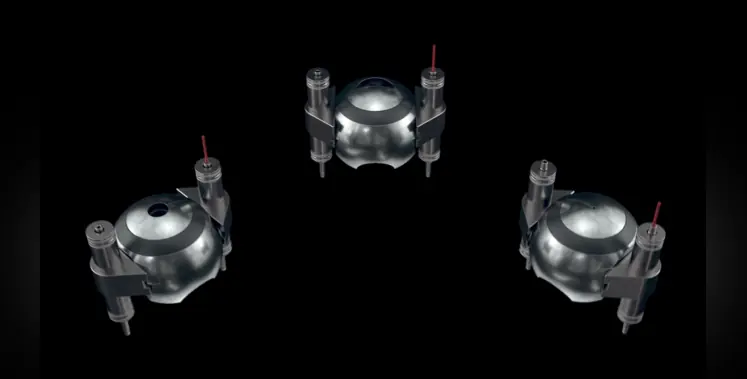
the new design enables safe intervention in confined environments previously inaccessible to standard BOP equipment. (Image source: Unity)