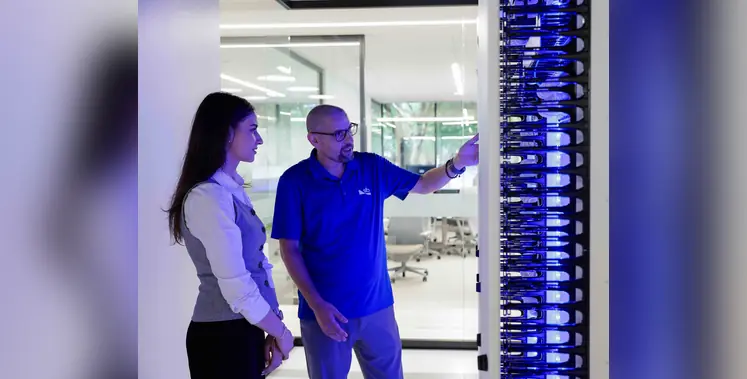









SLB is expanding its technology collaboration with NVIDIA to design and deploy critical AI infrastructure and models for the energy industry
It follows the announcement of plans in 2024 to develop generative artificial intelligence solutions for the energy sector using NVIDIA software integrated with SLB’s Delfi digital platform and Lumi data and AI platform.
The initiative covers traditional machine learning, generative AI and emerging agentic AI technologies designed to improve performance and support reliable, efficient and lower-carbon energy systems.
Three strategic elements
It focuses on three strategic elements:
• Modular design for data centres: SLB will serve as the modular design partner for NVIDIA DSX AI factories, driving increased quality and reliability while also reducing costs, labour constraints and lead times, as well as enabling rapid and flexible scaling
• AI Factory for Energy: SLB will work with NVIDIA to develop an “AI Factory for Energy,” a reference environment powered by domain-specific generative AI models and industrial-scale agentic AI. This will run on SLB’s digital platforms to help energy companies scale AI for their data and operations.
• Accelerated computing for SLB digital platforms: The companies will optimise the processing of large datasets and AI models across SLB digital platforms using the latest NVIDIA AI infrastructure, boosting performance and efficiency in energy applications.“The winners in AI will be companies with the best data, the deepest domain expertise and the ability to scale,” said Demos Pafitis, SLB’s chief technology officer. “By collaborating with NVIDIA to advance modular data centre construction and harness our domain expertise and digital platforms, we’re enabling the energy industry to deploy AI at scale and transform operational data into smarter decisions.”
"AI is becoming the engine of a new industrial revolution, and the energy industry is at its forefront," said Vladimir Troy, vice president of AI Infrastructure at NVIDIA. "Building AI Factory infrastructure and domain models is needed to turn massive amounts of energy data into actionable insights and accelerate more efficient and sustainable energy systems."
SLB strengthens collaboration with NVIDIA to accelerate AI for energy