







At the S&P Global Energy Middle East Petroleum & Gas Conference (MPGC) held in London, Musaab Al Mulla, Aramco's vice president of market analysis and sustainability, underlined the need for the recognition of the role refined products play in resilient energy systems, which has been brought into sharp focus in the current crisis
Al Mulla highlighted the need for a realistic approach to the role of oil and gas as the engine for economic growth and the impact of the crisis on products ranging from helium to materials and fertilisers, with shortages of the latter in turn impacting food supply.
A common theme of the event was the need for resilience and redundancy in the energy system to be able to weather such crises. Al Mulla highlighted Aramco’s focus on long-term strategic planning and investment for the future, as exemplified by its investment in the east-west pipeline which is now not only transporting crude but also products, building flexibility into the system, transporting crude to refineries for export and ensuring refined products get to market.
“The world has realised the need for more investment in pipeline infrastructure and domestic refining to ensure industry is working together,” he said.
He remarked that the crisis has demonstrated demand is resilient and has exposed the underinvestment in refineries, with capital flows being redirected towards the energy transition and resulting in a deficit of 3mn bpd.
“We need to build refineries and infrastructure while also reducing emissions,” he said, noting that Aramco has one of the lowest emissions intensities.
Discussing demand for refined products, he noted that demand for jet fuel continues to grow and refinery utilisation is at record rates.
“We believe demand will continue to be resilient, and low carbon products will be important as well,” he said.
He foresaw strong growth in chemicals with the market for durable materials growing in multiple sectors, noting that carbon-based materials can help reduce emissions. Replacing steel with polypropylene in cars can reduce emissions by 80%, for example. He also highlighted growth in demand for low carbon aviation fuel (lcaf), fossil-based jet fuel, which is 10% lower in emissions than conventional jet fuel, and complements sustainable aviation fuel (saf) as it addresses some of its limitations.
Highlighting the continuing long-term strategic importance of refining, he stressed that gasolene will still account for a significant proportion of transportation fuel by 2050.
With resilience, reliability and sustainability being global challenges, Al Mulla said that resilience for Aramco means building on operational excellence, long-term investment in oil and gas, new energies and low carbon, and localisation, noting Aramco’s 70% localisation target to ensure a resilient supply chain.
“Resilience is correlated with sustainability, you can’t be sustainable if you are not resilient,” he said. It involves not only having the flexibility to be able to adapt to shocks, but also having the capacity to innovate and grow supply while also reducing emissions, he added.
Commenting on the Middle East’s attractiveness as an investment destination, he said, “Clearly the region remains the hub for oil and gas petrochemicals and refining, and it has shown its infrastructure and energy system have been resilient in this historic crisis.”
He said Aramco is also looking at other regions, and urged the need for more investor-friendly policies in Europe, where there is a need for more domestic refining and chemicals so as not to be dependent on other regions.
Discussing the role of gas, Al Mulla said there will be increasing demand to fulfil the growing demand for power from data centres, highlighting the move towards regional data centres.
The role of refining in resilient energy systems
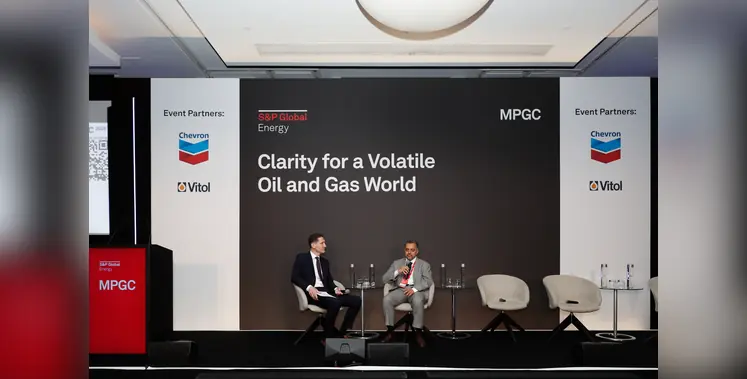
Musaab Al Mulla (right) in conversation with Daniel Evans, VP, global head, fuels & refining, S&P Global Energy. (Image source: S&P Global Energy)