








The quarterly results issued by the leading oilfield services companies have highlighted the impact of the Middle East conflict on their revenues and operations
Halliburton recorded Middle East/Asia revenue in the first quarter of US$1.3bn, a decrease of 13% year over year, attributed to lower activity across multiple product service lines in Saudi Arabia and decreased drilling-related services in Qatar, although it saw higher completion tool sales and improved fluid services in Asia. The drop was seen in both the completion and production and drilling and evaluation divisions, with lower completion tools sales, decreased pressure pumping services and multiple drilling and evaluation product service lines.
Halliburton’s total revenue for the first quarter of 2026 was US$5.4bn, flat when compared to the first quarter of 2025, although net income was US$461mn compared with US$240mn in first quarter of 2025.
Jeff Miller, chairman, president and CEO said, “In international markets, our performance around the world outpaced disruptions from the Middle East conflict.”
SLB also reported a challenging start to the year as widespread disruptions in the Middle East impacted its business.
“The impact was most pronounced in Well Construction and Reservoir Performance, as SLB demobilised operations in a number of countries in response to customer actions to safeguard personnel and facilities,” said SLB chief executive officer Olivier Le Peuch.
First-quarter revenue of US$8.72bn increased 3% year on year with growth across North America both on land and offshore, Latin America, Europe & Africa, and Asia. These results reflect activity from the acquired ChampionX businesses, which contributed US$838mn of revenue, consisting of US$579mn in North America and US$231mn in the international markets. Excluding the impact of this acquisition, first-quarter 2026 revenue decreased 7% year on year.
Revenue in the Middle East & Asia of US$2.69bn decreased 13% year on year, reflecting the combined effect of lower activity and disruptions related to the conflict. These disruptions occurred in Qatar due to the declaration of force majeure and in Iraq and offshore operations across the region due to production shut-in constraints and security conditions.
Both the well construction and production systems divisions revenues saw decreases due to the conflict.
Baker Hughes recorded revenue of US$6.6bn, up 2% year on year, but saw Middle East / Asia oilfield services and equipment revenues down 19% year on year.
“Our exceptional first-quarter performance highlights the strength of our portfolio and the momentum we are building as we progress through Horizon 2(1). Despite significant disruptions in the Middle East, our teams executed at a high level and delivered results that exceeded our guidance range. Although we recognize this achievement, we continue to prioritise the safety and wellbeing of our employees and their families in the region," said Lorenzo Simonelli, Baker Hughes chairman and chief executive officer.
“Both OFSE and IET delivered strong results amid Middle East disruptions, underscoring the versatility and durability of the portfolios."
Girish Saligram, Weatherford’s president and chief executive officer, also notes the “complex and challenged environment” in the first quarter.
“With significant operational disruptions in the Middle East, we stayed focused on what matters the most - protecting our employees, maintaining continuity of operations for our customers, and controlling the variables we could. While we faced losses in revenue and increased costs due to the Iran conflict, we were able to offset the impact of those through additional contributions from other parts of the business,” he said.
The company’s second quarter results are likely to be softer than anticipated due to the time it is likely to take for activity levels to normalise, logistics to stabilise and incremental costs to come down, with performance dependent on the timing of these factors, he said.
Oilfield services companies' results reflect Middle East disruption
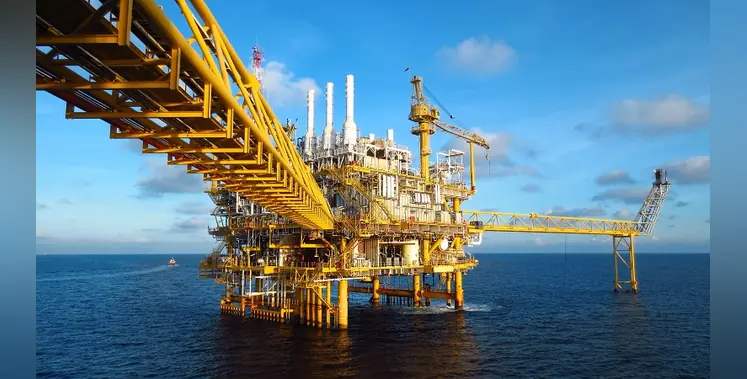
The oilfield services companies have been impacted by the Middle East crisis. (Image source: Adobe Stock)