Middle East land drilling rig demand is forecast to rise 60% from 2025 levels by 2035 despite the geopolitical uncertainty as operators push ahead with major developments, according to new analysis from Westwood Global Energy Group
Westwood's Global Land Drilling Rig Outlook 3Q 2026 projects average global demand of approximately 4,250 rigs annually between 2026 and 2030, rising to almost 4,550 between 2031 and 2035 – 12% above the 2021–2025 average. Meanwhile, as older rigs are retired and demand continues to grow, the gap between supply and demand is expected to narrow, pushing global utilisation from an average of 48% in 2026–2030 to 53% in 2031–2035.
Key findings from the outlook include:
• Middle East growth: Rig demand is forecast to reach around 820 units by 2035, a 60% increase on 2025 levels. Despite disruption to drilling activity in 2026, Westwood expects a recovery from 2027, led by Saudi Arabia and a UAE. Saudi Arabia is pursuing crude increment projects as it looks to maintain maximum sustainable capacity at 12 mn bpd, and is pursuing major gas developments with the aim of lifting gas production by 80% over 2021 levels by 2030. These include the Jafurah gas development, the largest unconventional largest liquid-rich shale gas play in the Middle East which produced first gas in December 2025 and is targeting sustainable sales gas production of approximately 2 billion standard cubic feet per day by 2030. While the UAE is also pursuing major developments with the target of increasing oil production to 5mn bpd by 2027, and now that it is freed from OPEC quotas, is looking to bump this up even more. On the gas front ADNOC is delivering one of the world's largest integrated gas growth programmes, with US$28bn capex set to be invested between 2026 and 2030. The programme includes Rich Gas Development, which will expand gas processing capacity and increase the availability of natural gas for domestic customers, Estidama, which will optimise and modernise ADNOC Gas' pipeline network to support growing demand across the UAE, and the Ruwais Diyab Unconventional Gas Development in Abu Dhabi, which will deliver 345 million standard cubic feet per day (mmscfd) of raw gas from 2029 with the potential to reach up to 1 billion scfd in the future.
• Latin America expansion: Regional rig demand is forecast to increase 54% from 2025 levels to around 260 units by 2035. Argentina's Vaca Muerta shale play remains a major driver, with demand expected to increase from 84 rigs in 2025 to 113 by 2035. Venezuela also presents significant potential, with demand projected to grow over 600% on 2025 by 2035, driven by strong operator investment plans, support from the US administration and the partial lifting of sanctions – although infrastructure, workforce and supply chain constraints remain.
• Growing demand for high-specification rigs: High-horsepower rigs are forecast to achieve average utilisation of 64% over 2026–2035, compared with 35% for lower-horsepower units as operators increasingly target deeper and more complex reservoirs. This is also contributing to the redeployment of under-utilised US rigs to international growth markets, including Argentina, Australia and the Middle East.
With digital technologies and AI increasingly being harnessed by operators to improve operations, there is an increasing demand for automated rigs for improved efficiency and safety. ADNOC for example has deployed its AI-enabled Real-Time Operations Center (RTOC) across its fleet of more than 120 onshore and offshore drilling rigs. The platform brings live rig data from across drilling operations into a unified, real-time environment that gives ADNOC teams greater visibility of activity across the fleet, helping them improve coordination, identify risks and issues earlier and make faster, more informed decisions, thereby managing operations more effectively. The RTOC combines operational data, automated dashboards, advanced analytics and AI-driven insights to turn large volumes of drilling data into clear, actionable information.
Ben Wilby, research manager, Onshore Energy Services at Westwood, said, “The conflict in the Middle East has significantly disrupted drilling activity this year, particularly in Iraq. A return to 2025 levels of rig demand will depend on regional security stabilising and reliable access to export routes. Nevertheless, operators continue to make long-term commitments to the region, giving us confidence in its growth prospects once conditions allow.
“More broadly, the outlook for land drilling is positive, with growing demand and a gradually shrinking rig fleet expected to support higher utilisation. But not every rig will benefit equally. Operators are drilling deeper, more complex wells and increasingly want modern technology and automation to improve efficiency and safety. Contractors need to make sure their fleets meet increasingly demanding operator specifications if they want to capitalise on that growth.”
Middle East land drilling rig demand set to grow strongly
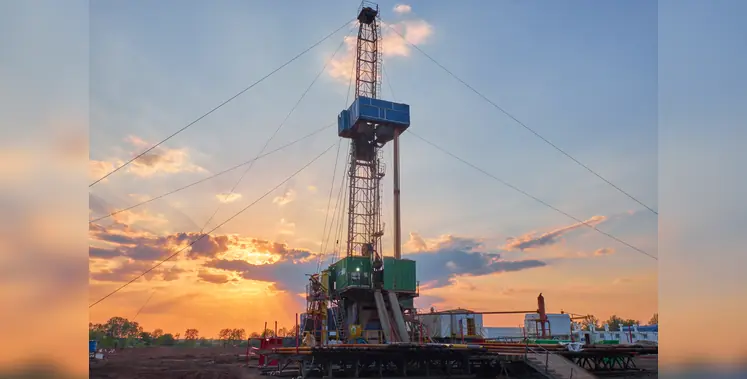
Middle East land drilling demand is forecast to grow by 60% from 2025 levels by 2035. (Image source: Adobe Stock)