







Kuwait Petroleum Corporation (KPC) is pushing ahead with its strategic expansion plans undeterred despite the crisis in the Middle East, its deputy chairman and CEO Shaikh Nawaf S.Al-Sabah assured delegates at the Energy Intelligence Forum in London
"We have not stopped, slowed down or even thought again about any of our strategic plans," Shaikh Al-Sabah said, confirming that KPC remains on track to deliver its target of increasing production capacity to 4mn bpd by 2035, and to increase domestic gas production to 2mn scf/d by 2040.
“We’re investing US$9-10bn a year in capex to reach those two targets; we’ll continue to make these investments and grow internationally throughout this process,” he said. “We are doing this because we recognise that it is our hydrocarbons that will be most in demand a decade from now, and two decades from now, in fact for the rest of our lifetimes.”
He added that the two major projects announced just before the beginning of hostilities are also going ahead as planned. Project Peregrine, which involves the lease and leaseback of existing pipelines in Kuwait, will finance future growth. Investors remain fully committed to the project, he said, and definitive agreements were signed in July.
“We were able to execute on time, on target with valuations that were higher than we expected before the war started, and at a cost less that any preceding transaction in the region of a similar scope, so we ended up with US$7.85bn in new foreign investment in the pipeline network.” This was because investors from around the world recognised the resilience in Kuwait and took a long-term view, he said.
The other project announced is Project Seef, which will develop three massive offshore discoveries made over the past two years, together containing over 3bn bbl of oil in recoverable reserves. Noting that all Kuwait’s production to date has been onshore, he pointed out that this achievement in getting a 100% exploration success, given that three wells drilled had resulted in three major discoveries. Subsequent wells have been drilled with further discoveries made, which have not yet been officially announced.
“We are asking international oil companies to partner with us to develop those resources under an operating services contract. So we’re moving ahead according to the exact same schedule that we had put together even before the war began.
“It is that type of resilience that really reflects how Kuwait and KPC are looking at this crisis and planning for the future,” he said.
Proving resilient
Discussing the company’s resilience, Shaikh Al-Sabah drew parallels with the destruction of Kuwait’s oilfields at the time of the Iraqi invasion and occupation of Kuwait in 1991, when it had been able to bring production back relatively quickly because of the resilience of its people and its reservoirs, as well as the strength of its international partnerships. Kuwait and its GCC neighbours had demonstrated resilience in the face of the current attacks by planning in advance for such a scenario.
However, he said that while storage buffers and alternative pipeline routes that had been put in place had contributed to this resilience, these buffers are evaporating and “none of these is a replacement for free navigation to the Strait of Hormuz …ultimately the resilience of the international system can only hold up for so long.”
Kuwait had responded to the crisis by slowly reducing production from 2.6mn bpd to a level sufficient to serve Kuwait’s domestic demands, when it was unable to export, and then when it had been able to restart exports by using its own internal tanker fleet, building production back up again to current level of around 2mn bpd.
“We have the capacity to go back up to our current maximum sustainable capacity of 3mn bpd, if we have the export routes available, and this comes down to the ability to move oil through the Strait,” Al-Sabah said. “We have been doing that by using our strategic tanker fleet.” He acknowledged the contribution of Kuwait’s customers, who had brought their own tankers in to support Kuwait’s operations.
Al Sabah noted that while there is an abundance of crude, there is a shortage of product, as there is no way to transport it from refineries, except through shipping, which is heavily restricted. Distillate prices are sky high, as are refinery margins. What is needed in the future is to move product out of the Gulf to get refineries to full production. Kuwait is cooperating with its neighbours on transport options. KPC is also leveraging its investments in refineries outside Kuwait and shipping as much crude as it can to those refineries, growing associated storage to make them even more resilient against any future. It is also building out its storage capacity in Kuwait itself.
“We have to be completely self-reliant,” Shaikh Al-Sabah said.
Echoing the remarks of Aramco CEO Amin H Nasser earlier, he urged an international response to the crisis, bringing producers and consumers together. “This isn’t a crisis that can be borne only by the producers, that we have to build more pipelines. The response has to be inclusive of consuming countries as well.”
Kuwait Petroleum Corporation on track with expansion plans: CEO
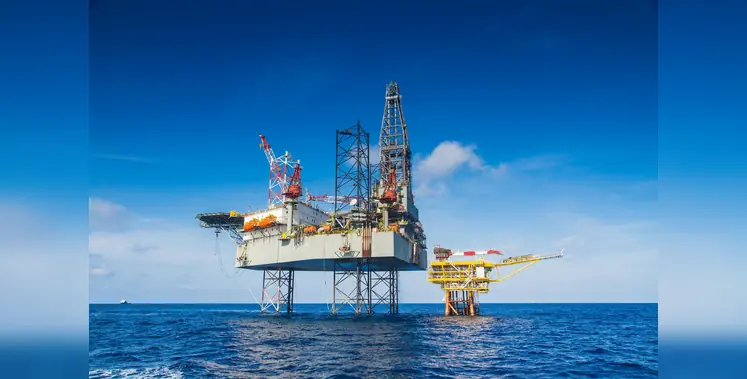
Kuwait is developing its offshore discoveries. (Image source: Adobe Stock)