







The gas and LNG markets face potential oversupply thanks to record FID and demand uncertainty, according to energy consultancy Wood Mackenzie, which identifies five key global gas and LNG themes for 2026:
LNG FID momentum to moderate despite continued project progress
2025 was a record year for final investment decisions, with nine projects totaling 72 mmtpa moving ahead. Three smaller floating LNG projects, two in Argentina and one in Mozambique, advanced, with CP2
Phase 2, Delfin FLNG 1 and Cheniere's Sabine Pass Stage 5 "probable" FID for 2026, supported by strong contracting and cost advantages.
However, with 225 mmtpa of LNG supply currently under construction, the expectation is for lower LNG prices and rising EPC costs. Several projects face delays from inflated construction costs, supply chain constraints and evolving financing conditions. Competition for customers between pre-FID projects and post-FID players is likely to increase. FIDs for well positioned projects, including LNG Canda and
Qatar’s North Field West, may slip into 2027. The outlook for FIDs is expected to moderate in 2026.
Prediction: 4-5 projects take FID in 2026
Asian LNG demand expected to rebound after sharp 2025 contraction
Asian LNG demand contracted by more than 12 Mt year-on-year (4.5%), with China declining by 11 Mt due to a mild winter, high LNG prices and US trade tariffs.
Supply growth of nearly 30 Mt is likely to drive spot prices below oil price parity, encouraging more spot procurement from emerging markets.
China will be the market to watch. Gas demand should grow by 5% on infrastructure projects and real estate recovery. With stable domestic production and flat pipeline imports, LNG will fill the gap, increasing by around 6 Mt but still below 2024 import levels. New gas-fired power stations and regasification capacity will contribute to increased demand across Taiwan, Bangladesh and Vietnam. Weather remains a wild card.
Firmer Asian demand will prove increasingly critical to absorb the wave of new LNG supply.
Prediction: Asian LNG demand to increase by 14 Mt (+5%) in 2026
Russia-Ukraine peace deal could reshape European gas and global LNG balances
The prospect of a US-brokered peace deal in Ukraine fuelled sharp gas price swings in 2025. Should a peace agreement be announced, the most likely market impact would be the lifting of sanctions on Arctic LNG-2 and Portovaya, which could add up to 10 mmtpa to a global LNG market already poised to increase by close to 30 Mt in 2026.
The EU agreed to phase out Russian LNG by 2027 and pipeline gas by 2028. Russian supply under short-term contracts is expected to end from April 2026 for LNG and June 2026 for pipeline flows. The immediate 2026 market impact would be limited, though the EU's resolve may be tested if the ban becomes a peace settlement bargaining point.
Prediction: The EU moves ahead with ban on Russian imports
Henry Hub to trade above US$4/mmbtu as US gas market tightens structurally
Colder than average temperatures briefly drove Henry Hub futures as high as $5.50/mmbtu in December 2025. The US gas market is becoming structurally tighter. LNG exports have increased 17% compared to the same period last year.
LNG export capacity expansion will require incremental feedgas of 2.7 bcfd, with data centres and other sectors adding 3.4 bcfd total in 2026, equivalent to 3%.
As usual, weather dynamics will be key for where prices settle in the winter. Beyond that, the pace and magnitude of price correction will depend on how quickly suppliers respond to tightening fundamentals.
Higher Henry Hub prices longer term will be necessary to promote growth.
Prediction: Henry Hub will average US$4/mmbtu in 2026
EU Methane Regulation and CSDDD face industry criticism over compliance challenges
The EU Methane Regulation (MER) and the Corporate Sustainability Due Diligence Directive (CSDDD) have faced strong criticism from the gas and LNG industries in 2025, especially from major global exporters.
Companies support MER objectives but say compliance difficulties are delaying new contracts and risk disrupting imports as Europe ends Russian reliance.
The CSDDD has already been scaled back by EU officials. Yet critics point out that the EU is imposing obligations on companies outside its jurisdiction, a major sticking point. The US and Qatar warned that the rules could threaten their ability to supply LNG to the bloc.
Prediction: The EU is likely to proceed with both regulations, but further watering down and additional practical compliance measures should be expected
"The gas and LNG industry is navigating a complex transition as abundant new supply meets questions about demand growth and regulatory risks," said Massimo Di Odoardo, vice president, Gas and LNG Research. "The structural tightening of the US gas market, combined with Europe's push to end Russian imports while implementing stricter methane rules, creates both opportunity and risk. How Asia responds to lower prices will be critical to absorbing the supply wave ahead."
Key global gas and LNG themes for 2026
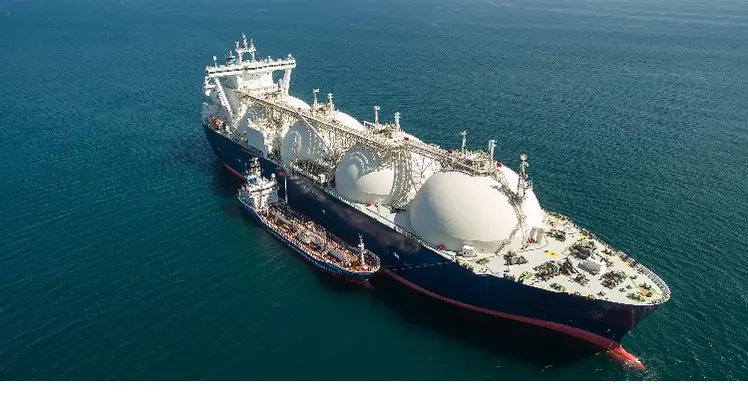
The LNG market faces a potential oversupply. (Image source: Adobe Stock)