








The IEA’s latest quarterly gas market report shows the extent to which the Middle East crisis is disrupting international natural gas markets and delaying a significant amount of new LNG capacity that had been on track to come online in the second half of this decade
The disruption to shipping through the Strait of Hormuz since the start of March has created unprecedented uncertainty, removing close to 20% of global LNG supply from the market and triggering sharp price increases across key importing regions. In March, natural gas prices in Asia and Europe rose to their highest levels since January 2023, contributing to a contraction in natural gas demand in key LNG importing markets.
Global LNG production declined in March by 8% year-on-year, with a sharp drop in exports from Qatar and the United Arab Emirates only partially offset by higher output from other regions. As the disruptions began to spread through global supply chains, LNG deliveries also fell, with a steeper decline observed in April. The impacts of the supply losses are partly mitigated by the strong increase in non-Qatari LNG supply, including the start-up of new LNG liquefaction plants for which investment decisions were taken several years ag
Natural gas demand has weakened in key importing markets in response to higher prices, milder weather and policy measures aimed at reducing gas consumption. In Europe, natural gas demand declined by around 4% year-on-year in March, largely driven by stronger renewable electricity generation. Several Asian countries are implementing fuel-switching and demand-side measures to limit gas use amid the supply crisis.
Beyond the immediate disruption, the crisis is expected to tighten the markets in the medium term, with damage to LNG trains in Qatar set to reduce projected supply growth and delay the impact of the anticipated global LNG expansion wave by at least two years. The combined effect of short-term supply losses and slower capacity growth could result in a cumulative loss of around 120 billion cubic metres of LNG supply between 2026 and 2030, around 15% of the expected global LNG supply over this period. While new LNG projects in other regions are expected to offset these losses over time, the impact will prolong tight markets through 2026 and 2027.
The report highlights the importance of strengthening global gas supply security through continued investment across the LNG value chain and enhanced international cooperation between producers and consumers. It also notes the advantages that a diversified portfolio of long-term contracts can bring for gas importers in terms of mitigating price volatility in periods of disruption
IEA report highlights impact of Middle East crisis on gas markets
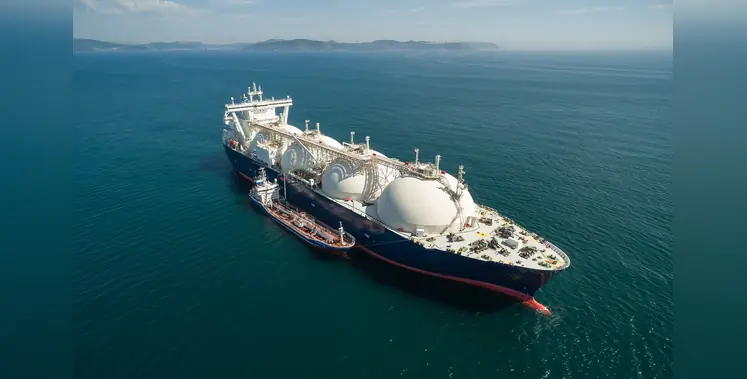
The closure of the Strait of Hormuz removed almost 20% of global LNG supply from the market . (Image source: Adobe Stock)