







The Middle East could lead the way in shaping a tech-empowered energy workforce, says Stephen Marcos Jones, chief executive officer, OPITO
The energy industry’s greatest asset has always been its people; the engineers, technicians, and operators whose expertise keeps complex systems running safely and efficiently. Every innovation, every safety milestone, and every major project has relied on the expertise of the workforce behind it.
That foundation is now evolving. As pressure on existing assets rises and new types of energy infrastructure come online, the diversification of skills required from energy workers is rapidly increasing. Adding to this, is something pervading all operations - advanced technology, which has moved from pilot projects to the operational core. From predictive maintenance and automated drilling to AI-driven safety monitoring and virtual reality safety simulations, digital tools are augmenting how work gets done and what’s expected of the people doing it.
But in this new landscapethe pressing point isn’t actually how technology will reshape energy, but how people will with these new tools at their fingertips. And perhaps nowhere is that question more urgent, or more promising, than in the Middle East, a region that stands out for both its ambition and its readiness. The question is, can it lead the way in building an energy workforce that is not just tech-enabled, but tech-empowered?
From uncertainty to capability
If we zoom in on AI as an example of advanced technology, until recently, the conversation about the application of AI in energy was filled with uncertainty: what would it automate, what would it replace, and what would that mean for people and their jobs? That debate has moved on. The real question now is how people and technology can work effectively together.
Across refineries, rigs, and control rooms, AI and advanced tech is already embedded in daily operations from predictive maintenance to digital twins and smart safety systems. Now, as the energy sector continues down this road of augmented intelligence, success - in terms of safety, productivity, and competitiveness - will hinge on ensuring people are equipped to lead that transformation, not be left behind by it.
This requires confidence. The human workforce must be able to interpret, validate, and act on the data that technology delivers. Ultimately, success will not be defined by how much technology an organisation adopts, but by how well its people understand and apply it.
Why the Middle East is leading this shift
Few regions are better placed to lead this transformation. The Middle East’s energy workforce has long powered its global influence. Now its deep operational expertise coupled with the region’s push for digital transformation through rapid advances in AI, automation, and broader technology is creating a powerful convergence between people and technology.In fact, the UAE and Saudi Arabia both rank among the world’s top three AI superpowers, integrating AI into national economic and industry agendas.
So, where globally, studies, including the WEF’s Future of Jobs Report, predict that nearly a quarter of jobs will evolve significantly by 2027, with technology as a major influencer, in the Middle East, this projection is already happening.
Furthermore, a recent IDC study showed over 40% of UAE businesses already deploy AI in operations, while nearly two-thirds say their adoption pace has quickened over the past two years. Yet, the real challenge isn’t simply access to technology or even how quickly the industry can implement it because in an industry where operational risk is measured in lives and livelihoods, speed without preparation is not an option.
Closing the confidence gap
The focus must now turn to readiness, building the confidence, governance, and training frameworks to ensure that every worker, at every level, is both competent and comfortable harnessing new technologies safely and effectively. The latest ADNOC report, Powering Possible, made this clear, highlighting that workforce gaps are still one of the biggest barriers, and that bringing responsible AI into energy operations is essential for safety and confidence. The report also found that 78% of leaders see talent and training as major challenges when it comes to adopting and using AI.
Many forward-thinking energy companies and education partners are already helping to close this gap, to ensure that progress is not just accelerated, but sustained. Robust training systems and recognised skills frameworks are increasingly seen as essential in the energy sector. Staying ahead of AI requires a proactive stance, not a retrospective one. Across the region, workforce development organisations are embedding digital learning tools, from VR simulations to digital twins, into competency programmes, helping operators ensure their people are fully prepared for AI-enabled operations.
A workforce built for the AI era
As the energy transition accelerates, the Middle East region has a unique opportunity to lead in both technology and talent. Its ability to pair digital ambition with workforce empowerment could define how the global industry approaches this new wave of technology.
That means rethinking learning systems, certification models, and cultural expectations to create pathways where technology enhances human expertise rather than replaces it.
The Middle East is already on the right path to power the energy systems of the future and to shape what a truly tech-empowered workforce looks like. The region’s energy transformation may have added technology as a new fuel for progress, but its true power still lies in the people who are properly prepared to use it.
Does the Middle East hold the key to the next-era energy workforce?
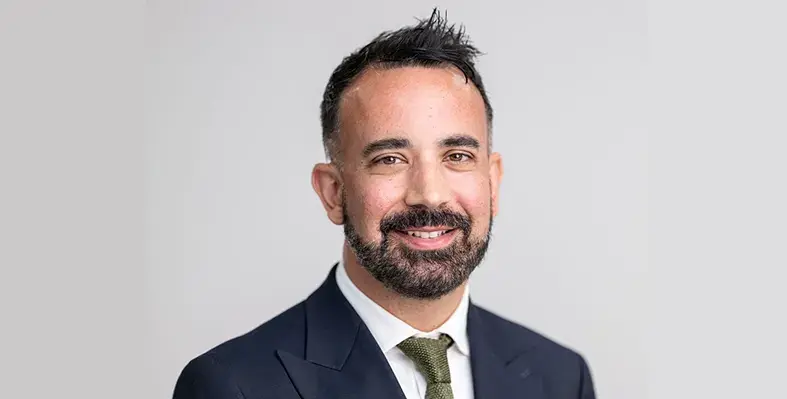
Stephen Marcos Jones, chief executive officer, OPITO. (Image source: OPITO)