








Aramco CEO Amin H. Nasser has warned of ‘catastrophic consequences’ for the oil markets and the global economy if the conflict in the Middle East continues
Speaking in a media call for the energy giant’s 2025 full year financial results, he said, “Global spare capacity is mostly concentrated in this region, so it’s absolutely critical that shipping resumes in the Straits of Hormuz.
“The disruption has caused a severe chain reaction in not only shipping and insurance but there’s also a drastic domino effect on aviation, agriculture, automotive and other industries,” Nasser continued.
“While we have faced disruptions in the past, this one by far is the biggest crisis the region’s oil and gas industry has faced.”
Nasser gave assurances that Aramco has contingency plans in place for various scenarios, crises and challenges to ensure it continues to deliver to its customers, leveraging its significant operational capabilities, and the flexibility of its advantaged infrastructure and network in Saudi Arabia and globally.
The company is managing to reroute some of its crude exports via the East-West pipeline to the port of Yanbu on the Red Sea to bypass the Strait of Hormuz, but this is now close to capacity and is unable to fully compensate, with 3-4mn bpd of Saudi exports remaining exposed to the closure, according to Rystad Energy.
While Saudi Arabia is reported to have begun reducing oil production in response to the crisis, Nasser said at the earnings call that Aramco could restore output in days rather than weeks once the Strait of Hormuz reopened.
Aramco has also said its Ras Tanura refinery, one of the Kingdom’s key refining hubs, is restarting after sustaining limited damage from debris from intercepted drones.
2025 results
Aramco reported profits of US$104.7bn in 2025, down from US$110.3bn in 2024, reflecting a lower average oil price of US$69.2 compared with US$802 the previous year. It recorded capital expenditure of US$50.8bn, up slightly from US$50.4bn the previous year.
In terms of operations, Aramco reported significant progress in expanding gas production capacity, with start of production at Jafurah in December 2025, and commencement of operations at Tanajib Gas Plant. The two plants will provide about 1.3bn standard cubic feet per day of combined sales gas production capacity. Jafurah Phase II and the Fadhili Gas Plant expansion are set for 2027 completion, while the Master Gas System Phase III is progressing, and due to add 3.15bn standard cubic feet per day of transmission capacity by 2028. The Marjan crude oil increment was brought onstream and water injection operations commenced at Berri crude oil increment, while on the exploration front, Aramco discovered six new fields and two new reservoirs of Arabian oil.
Downstream, the energy giant is progressing towards its long-term target of 4mn barrels per day of liquids-to-chemicals capacity, with Shaheen in South Korea, Amiral in Saudi Arabia and HAPCO projects in China, which are under development and on track for completion in 2026 and 2027.
Nasser said, “Aramco delivered robust growth and strong cash flows in 2025, reinforcing confidence in our strategy. Our disciplined capital allocation, combined with our lower-cost, adaptable, and highly-reliable operations, drove strong financial performance in a year marked by price volatility. This enabled a 3.5% increase to our base dividend, reinforcing our focus on delivering sustainable and progressive shareholder returns.
“We continue to leverage advanced technologies including AI to enhance efficiency and unlock value across our business. We also continued to maintain our impressive safety track record in 2025, with our lowest total recordable case rate since the IPO.
“Following another year of record oil demand in 2025, we believe ongoing investments in our operations position us well for the future…Our strong project momentum underscores potential for future operating cash flow growth, creating further opportunities and reinforcing our position as a global energy leader.”
Aramco CEO warns of "catastrophic consequences"
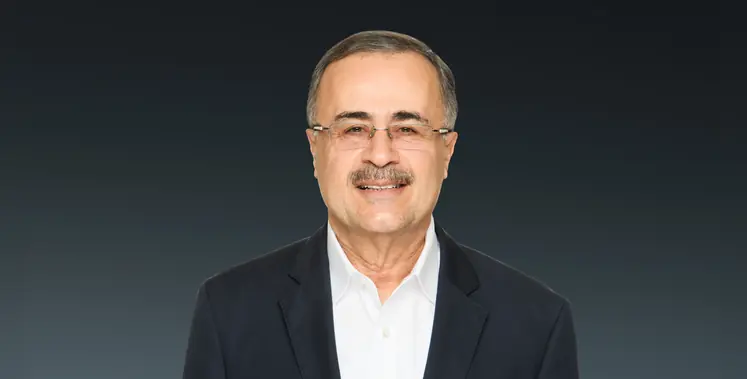
Amin H. Nasser, president and CEO of Aramco. (Image source: Aramco)