








In The Spotlight
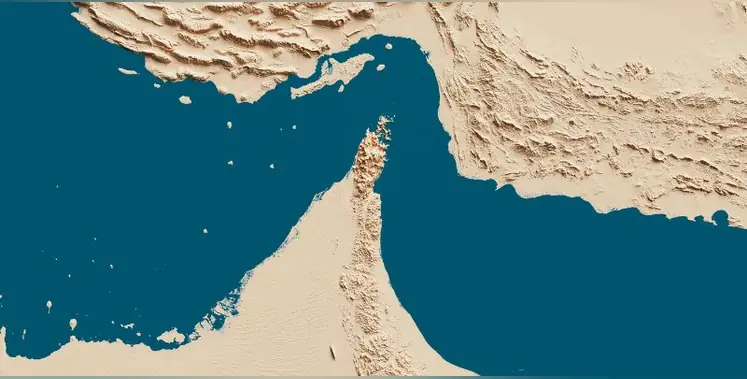
Drone attack on ADNOC vessel transiting the Strait of Hormuz
The Ministry of Foreign Affairs UAE has issued condemnation of a drone attack targeting a vessel linked to ADNOC as it transited through the Strait of Hormuz, warning of escalating risks to regional stability and global energy security.
The incident took place on Monday, 4 May 2026.
According to a statement released by the ministry, two drones from Iran were used in the incident, which struck a national carrier affiliated with ADNOC.
No injuries were reported.
In its statement, the UAE called for an immediate halt to what it described as unprovoked attacks, urging Iran to de-escalate tensions and ensure the safe passage of vessels through the Strait of Hormuz.
The ministry stressed the need for the full and unconditional reopening of the waterway, which remains one of the world’s most critical energy transit routes, to maintain stability in global markets.
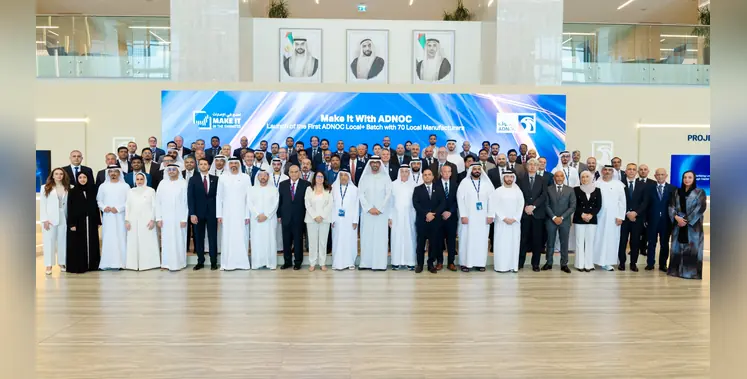
The investments were announced at the ‘Make it With ADNOC’ Forum. (Image source: ADNOC)
ADNOC announces mega investments for new projects
The Abu Dhabi national Oil Company has announced investments worth US$55bn in new project awards for 2026-2028, in line with the state-owned oil company's five-year capital expenditure (CAPEX) plan to meet growing global energy demand
This was announced at the ‘Make it With ADNOC’ Forum that fostered connection opportunities for local manufacturers with global engineering, procurement and construction (EPC) contractors. This was part of ‘Local+’ initiative under ADNOC’s In-Country Value (ICV) programme that prioritises Made in the Emirates products as first-choice across ADNOC’s project delivery.
Sultan Ahmed Al Jaber, UAE Minister of Industry and Advanced Technology and ADNOC Managing Director and Group CEO, said, “In line with the directives of the UAE Leadership to advance the UAE’s energy and industrial sectors, ADNOC is entering a defining execution phase in its strategy, driven by scale, pace and a laser-focus on delivery. This marks a new chapter of growth and resilience to meet rising global energy demand while strengthening and expanding the UAE’s industrial and manufacturing base.
“As we deliver on this phase of growth, we are bringing together leading EPC contractors with 70 top UAE manufacturers to enhance accountability, maximize in country value and ensure Made in the Emirates products are first-choice across our projects, and are at the core of how we procure, build and execute. We invite partners who can move at the pace of the UAE’s ambitions, match flawless execution with rock-steady reliability and demonstrate an unwavering focus on local value creation to join us in this new chapter of our journey.”
The event was held on the eve of Make it in the Emirates 2026, which is set to take place from 4 to 7 May, at ADNEC in Abu Dhabi. It is hosted by the UAE’s Ministry of Industry and Advanced Technology and co-hosted by the UAE Ministry of Culture, the Abu Dhabi Investment Office and ADNOC.
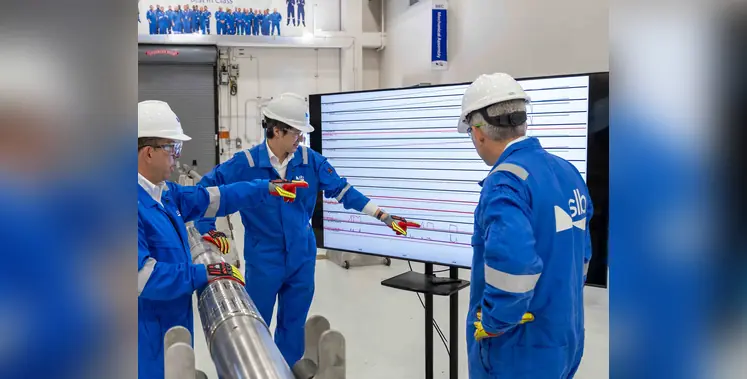
AlphaSight provides operators with real-time data to make faster more accurate geosteering decisions, optimise well placement and maximise reservoir contact. (Image source: SLB)
SLB launches AlphaSight reservoir mapping solution
SLB has launched AlphaSight, a new reservoir mapping and drilling intelligence technology designed to deliver clearer subsurface insight at increased depths
AlphaSight provides operators with real-time data to make faster more accurate geosteering decisions, optimise well placement and maximise reservoir contact in even the most complex geological environments.
The solution delivers the industry’s shortest extra-deep azimuthal resistivity sensor, positioned closer to the bit with downhole computing for superior reservoir visibility.
It has demonstrated proven success in the field across the Middle East, North Sea, North America, and Asia, helping operators improve well placement, sharpen reservoir contact, and enhance overall drilling outcomes – driving stronger asset productivity across diverse reservoir environments.
By expanding petrophysical insight and accelerating geosteering decisions, AlphaSight supports faster, more accurate and streatmlined well delivery and advances the transition toward digital and autonomous drilling operations.
“AlphaSight is the cornerstone of our new Sight family of advanced measurement solutions, marking a true breakthrough in geosteering technology – it's not just an incremental improvement, but a complete transformation in well placement,” said Cecilia Prieto, president of Well Construction. “With unprecedented resolution, depth, and look-ahead capabilities, AlphaSight, empowers operators with clarity to make more confident decisions and achieve greater production than ever before.”

UAE's exit from OPEC will take effect on 1 May 2026
UAE announces exit from OPEC and OPEC+
The United Arab Emirates announced today its decision to withdraw from the Organisation of the Petroleum Exporting Countries (OPEC) and the OPEC+ alliance, with the exit taking effect on 1 May 2026.
According to an official statement, the move follows a comprehensive review of the UAE’s production policy, current and future capacity, and is guided by national interest and the need to respond effectively to global market demands.
Following the exit, the UAE said it will continue to act responsibly by bringing additional production to market gradually and in alignment with demand.
It reaffirmed its position as a trusted producer of cost-competitive and lower-carbon barrels that can support both global economic growth and emissions reduction goals.
The country emphasised that the decision does not change its commitment to global market stability or cooperation with producers and consumers. Instead, it will enhance its ability to respond more effectively to evolving market needs.
"We reaffirm our appreciation for the efforts of both OPEC and the OPEC+ alliance and wish them success. During our time in the organisation, we made significant contributions and even greater sacrifices for the benefit of all," the statement read, adding, "However, the time has come to focus our efforts on what our national interest dictates and our commitment to our investors, customers, partners and global energy markets. This is what we will focus on going forward."
The news will no doubt come as a blow to OPEC at a time of ongoing market disruption and geopolitical uncertainty due to the US/Iran war. The loss of the UAE, with its 4.8mn bpd of spare capacity, could have the effect of diminishing OPEC’s production co-ordinating role and its ability to stabilise the market.
"As oil demand approaches a peak and begins to decline, incentives shift. Producers with spare capacity may prioritise monetising reserves and protecting market share over collective restraint," said energy consultancy Rystad Energy. The UAE, with its spare capacity and room to increase output, is particularly well positioned to pursue such a strategy outside the Group.
Head of Geopolitical Analysis at Rystad, Jorge Leon commented, "OPEC and OPEC+ have only ever been as strong as the members' willingness to hold barrels back from the market, and the UAE was one of those. Losing a member with 4.8 million barrels per day of capacity, and the ambition to produce more, takes a real tool out of the group's hands.
"The timing tells you something about where the oil market is going. With demand nearing a peak, the calculation for producers with low-cost barrels is changing fast, and waiting your turn inside a quota system starts to look like leaving money on the table.
"Saudi Arabia is now left doing more of the heavy lifting on price stability, and the market loses one of the few shock absorbers it had left."
"For OPEC+, this is a blow to unity and to Saudi Arabia’s ability to marshal producer discipline," commented Sam North, market analyst at eToro. "It does not mean a price war starts tomorrow, but it raises the risk that one emerges if others decide to defend market share. In trading terms, this adds a new volatility premium: more potential supply, less cartel discipline, and a Gulf energy map that suddenly looks a lot less predictable.”
The majority of energy, oil and gas organisations expect supply chain risk levels to increase over the next 12-24 months. (Image source: Adobe Stock)
Energy sector survey highlights supply chain risks
The majority of energy, oil and gas organisations expect supply chain risk levels to increase over the next 12-24 months with the ongoing volatility across global energy markets, according to new research from Achilles, a global leader in supply chain risk and performance management
The findings, drawn from 303 global energy, oil and gas respondents within the Achilles Global Supplier Risk and Sustainability Survey, also highlight that visibility across supplier networks remains a key challenge. Only 5% of organisations report full visibility on their extended supplier networks, while 64% report only limited or zero visibility. This suggests that many energy companies are operating without a reliable view of their supply chains, despite increasing compliance requirements and operational pressures.
While most organisations report only minor or occasional supplier-related disruptions over the past two years, a small proportion of respondents reported disruption costs exceeding US$10mn, pointing to the potential for high-impact events across critical supply chains.
The research also highlights the role of regulation and compliance in supply chain strategy. Legislation and regulatory pressure were identified as key drivers of sustainability action, alongside carbon reporting requirements and cost considerations. As companies operate across multiple jurisdictions, maintaining consistent supplier standards and compliance requirements remains a challenge.
At the same time, confidence in supplier readiness varies. Most organisations report being mostly or moderately confident in the accuracy of supplier‑reported information, while only a small minority express very high confidence, indicating potential compliance and operational risk.
The findings also highlight growing interest in artificial intelligence within procurement and supplier risk management. Over two-thirds of organisations report that they are either exploring or piloting AI use cases, with expected benefits including improved efficiency, stronger decision-making and improved supplier data accuracy. However, adoption remains at an early stage.
Adam Whitfield, head of Global Compliance and ESG at Achilles, said, “The energy sector is currently operating in a highly disrupted environment, with supply constraints, geopolitical instability and market volatility placing significant pressure on operations.
“In that context, visibility across supplier networks becomes increasingly important. Our findings show that many organisations still lack full visibility across their extended supply chains, which can limit their ability to respond effectively when disruption occurs.
“Managing risk in this environment requires more than periodic checks. As these pressures continue, strengthening supplier oversight and improving visibility will be critical to maintaining operational resilience and managing risk to ensure issues are identified early and managed effectively.”
Overall, the data points to a gap between increasing supply chain risk and organisations’ ability to monitor and manage it effectively. As energy companies continue to operate across complex supplier networks, improving visibility and strengthening oversight will be critical to maintaining compliance and managing risk.
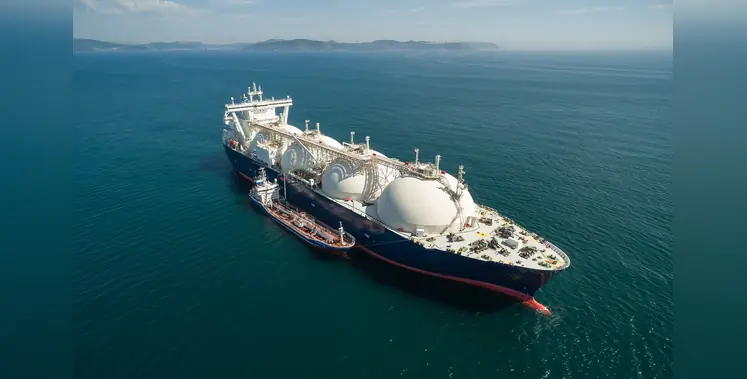
The closure of the Strait of Hormuz removed almost 20% of global LNG supply from the market . (Image source: Adobe Stock)
IEA report highlights impact of Middle East crisis on gas markets
The IEA’s latest quarterly gas market report shows the extent to which the Middle East crisis is disrupting international natural gas markets and delaying a significant amount of new LNG capacity that had been on track to come online in the second half of this decade
The disruption to shipping through the Strait of Hormuz since the start of March has created unprecedented uncertainty, removing close to 20% of global LNG supply from the market and triggering sharp price increases across key importing regions. In March, natural gas prices in Asia and Europe rose to their highest levels since January 2023, contributing to a contraction in natural gas demand in key LNG importing markets.
Global LNG production declined in March by 8% year-on-year, with a sharp drop in exports from Qatar and the United Arab Emirates only partially offset by higher output from other regions. As the disruptions began to spread through global supply chains, LNG deliveries also fell, with a steeper decline observed in April. The impacts of the supply losses are partly mitigated by the strong increase in non-Qatari LNG supply, including the start-up of new LNG liquefaction plants for which investment decisions were taken several years ag
Natural gas demand has weakened in key importing markets in response to higher prices, milder weather and policy measures aimed at reducing gas consumption. In Europe, natural gas demand declined by around 4% year-on-year in March, largely driven by stronger renewable electricity generation. Several Asian countries are implementing fuel-switching and demand-side measures to limit gas use amid the supply crisis.
Beyond the immediate disruption, the crisis is expected to tighten the markets in the medium term, with damage to LNG trains in Qatar set to reduce projected supply growth and delay the impact of the anticipated global LNG expansion wave by at least two years. The combined effect of short-term supply losses and slower capacity growth could result in a cumulative loss of around 120 billion cubic metres of LNG supply between 2026 and 2030, around 15% of the expected global LNG supply over this period. While new LNG projects in other regions are expected to offset these losses over time, the impact will prolong tight markets through 2026 and 2027.
The report highlights the importance of strengthening global gas supply security through continued investment across the LNG value chain and enhanced international cooperation between producers and consumers. It also notes the advantages that a diversified portfolio of long-term contracts can bring for gas importers in terms of mitigating price volatility in periods of disruption

Complacency can lead people to do something they know increases the likelihood of mind or eyes not on task. (Image source: Adobe Stock)
The neuroscience behind competence, complacency and human factors
At a lively and thought-provoking SafeStart webinar, Larry Wilson, CEO and founder of SafeStart, explained the neuroscience behind complacency, how often it is a contributing factor to incidents, and what techniques and strategies can be employed both at a personal and a company level to combat it
In high-risk environments, incidents rarely happen due to lack of skill; they happen when attention drops and complacency sets in. It is the combination of complacency with serious human factors that causes that causes the majority of serious incidents and fatalities.
The dangers posed by complacency have been recognised throughout history, as illustrated by an old Africa proverb “You only encounter the wild beast on the familiar trail.”
Delving into the two stages of the complacency continuum, Larry Wilson explained how neurological factors mean that it is inevitable that complacency sets in around the time that competence is achieved. And while competence is essential (who would trust an incompetent train driver or incompetent forklift truck driver?), with competence comes complacency, and that complacency can lead to mind not on task, or mind not on risk.
“You might be thinking about driving, but you’re thinking, is it the next right or the second right hand turn? You’re not necessarily thinking about that transport truck that is right beside you,” said Wilson.
At the second stage of complacency, it can start to affect decision making, as illustrated by statements such as “I’ve been doing this job for 20 years and never been hurt yet.”
“Once you get to the first stage of complacency your mind can wander. As soon as you get past the first stage of complacency, you become very susceptible to the active states, the active human factors such as rushing, frustration and fatigue. These can contribute to eyes not on task, mind not on task, line-of- fire, and balance/traction/grip issues, which increase the risk of injury.”
Critical error reduction techniques
Wilson then introduced the critical error reduction techniques to combat complacency which include:
• Self-triggering – It is important to recognise the active states and to self-trigger at this stage. “As soon as you realise you’re rushing, using too many things at one, or feeling frustrated, or feeling tired, you have to quickly think eyes; mind; line of fire; balance/traction/ grip. These are the four critical errors that can hurt you, and normally if you think about those errors, you will be much less likely to make one.” However it is not enough to self-trigger – reinforcement is needed. “It takes 66 repetitions to change those neural pathways,” Wilson noted.
• Good safety habits – These include strategies such as looking out for things that could cause you to lose your balance, traction or grip; looking for line of fire potential; moving your eyes before moving hands, feet, body or car; testing your footing or grip before you commit your weight, etc. Working on these helps to compensate for complacency. Wilson emphasised th e importance of working on one habit at a time, and gradually improving all five habits.
• Analyse close calls and small errors – “Every time you bump and scrape into something ask yourself, why, and think about how it could have been worse. When you contemplate the worse case scenario, it adds a bit more voltage in terms of creating those neural pathways.”
• Look at others for the patterns that increase the risk of injury.
Wilson went on to discuss how critical decisions are influenced or compromised by the four states - rushing, frustration, fatigue and complacency - or a combination of those states, and how they can lead to not following rules, procedures and PPE standards. For example not checking critical pieces of equipment, not using PPE or a device you would normally use or following a safe procedure you would normally do, being overly complacent with other people so you don’t anticipate potential problems, or being complacent enough to do something you know increases the likelihood of mind or eyes not on task, such as driving while on the phone.
He shared the example of a maintenance technician fabricator with 40 years experience, who was cutting off bolts with a grinder, a task he had done many times before. However a colleague had put the bolts on back to front, a source of frustration. The technician was not wearing a face visor, as he normally would, and took a deliberate risk by conducting an unsafe procedure. The grinder kicked back and cut him in the face.
“So for complacency, we need to focus on the critical error reduction techniques for complacency. For the people that are making the exception, we need to get them to self trigger on the states that are causing the exception. And by pointing out the traps that almost everyone falls into, and getting them to think about the states and the critical error reduction techniques, we will get safe behaviour on a voluntary basis. We want to create a culture of voluntary compliance.”
Wilson gave the example of a site in Nigeria which had gone five years without a lost time incident. Particularly impressive had been the staff parking lot, where every single car was voluntarily backed in without any sign instructing this, following sessions with SafeStart.
He went on to recommend tools and techniques companies could take to combat the second stage of complacency, such as ‘rate your state’ activities, toolbox talks, refresher training, near-miss reports etc.
These can be combined with actions people can take on a personal basis, such as using the critical reduction techniques, working on the safety habits, and using tools such as ‘rate your state’ to assess the likelihood of making a critical error.
“For example when you get into the car, ask yourself, ‘How am I doing: am I rushing, feeling frustration, fatigue, complacency?’ And halfway through the drive, ask yourself again.”
“You can’t beat complacency – it’s the way your brain is hardwired,” Wilson concluded. “The key thing is to recognise that you don’t have to let complacency beat you.”
Access the webinar
Keen to learn more? The webinar can be accessed here.