









In The Spotlight
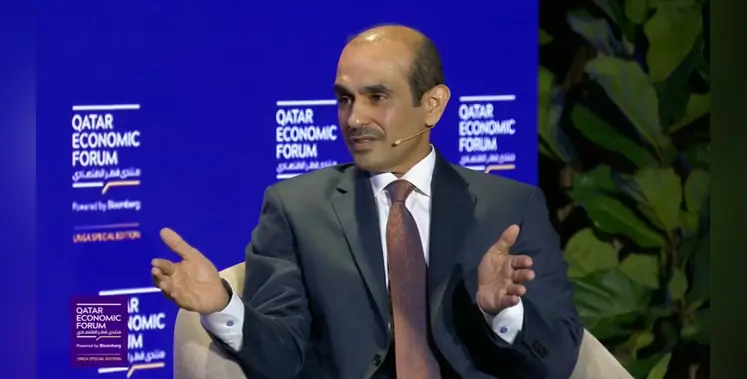
HE Saad Sherida Al-Kaabi , Qatar’s Energy Minister, CEO and president of QatarEnergy speaking at the Qatar Economic Forum. (Image source: QatarEnergy)
Qatar's Energy Minister warns of delay to LNG expansion projects
Qatar now expects production from its massive North Field East LNG expansion to start up in 2027, according to HE Saad Sherida Al-Kaabi , Qatar’s Energy Minister, CEO and president of QatarEnergy
Speaking at the Qatar Economic Forum, Powered by Bloomberg: UNGA Special Edition 2026 in New York, the Minister said the first production train at North Field East – the initial phase of Qatar’s LNG expansion – is expected to come online in the first half of 2027 as shipping disruptions in the Strait of Hormuz slow projects across the country’s economy. It had previously been expected to start production this year.
Tightening LNG supplies
The world's largest single non-associated gas field, the North Field, spanning over 6,000 sq. km, represents 20% of the world's total gas reserves. Qatar’s North Field expansion projects aim to raise LNG production capacity to 142mn tons per annum (MTPA) before the end of this decade. The North Field South project – the second phase of the expansion – is slated to come online in 2028, Al-Kaabi said – but these timings will depend on what happens in the Hormuz Strait and the ability to get facilities coming in.
The timeline reinforces the expectations that the near-closure of the Strait of Hormuz due to the Iran war threatens to tighten global LNG supplies for years, Bloomberg comments. Disruptions have already cut LNG supplies from Qatar — the world’s second largest LNG exporter and a key supplier to both the Asian and European markets — sending spot prices surging to the highest level since 2022 in Asia and Europe.
Qatar’s Ras Laffan plant, which produced nearly a fifth of the world’s LNG before the war began in February, can resume operations at undamaged parts of the facility “within a couple of weeks” when Hormuz reopens, the Minister said. The attack on Ras Laffan early on in the conflict resulted in damage to two LNG trains and Shell’s GTL plant, prompting Qatar to declare force majeure to its affected buyers.
“Repairs on the GTL train will be concluded in the first quarter of 2027. However, it will take three years for repairs on the two LNG trains,” the Minister said.
Qatar is currently exporting a very small amount of LNG through the Strait, Al-Kaabi said, adding that Doha has decided not to build bypass pipelines.
“LNG, our main export commodity, cannot be transported by pipelines. We will have to transport it by pipelines as gas and then liquify it at the receiving terminal, wherever that may be. This means we are building reductant facilities to the ones we are already building in Qatar as part of the North Field expansion project. This makes no economic sense.”
Diversifying options
Qatar is pivoting to become a larger trader of LNG in the meantime, and is handling more LNG outside of the Persian Gulf with the start of its Golden Pass export facility in the US. Shipments have started from the first train.
“We expect next year to have both the second and third trains in full operations. We are also building the largest ethane cracker in the world at the Golden Triangle Polymers Project.” The project will be starting up in the next few weeks, he said.
“We will be, in the very near future, the largest LNG trader in the world by far,” said Al-Kaabi. “And we’re building our position to become the largest trader.”

Cyber risk is growing in the face of increased connectivity. (Image source: Adobe Stock)
Industrial cybersecurity: why cyber risk Is driving investment
Industrial companies are increasing cybersecurity investment as connected operations, AI adoption and IT/OT convergence expand operational risk, with more than one-third seeing cybersecurity risk as a top obstacle to growth, according to a new study from Rockwell Automation
Industrial companies are connecting more systems, scaling AI faster, and pushing operations to move in real time. Those investments create speed, efficiency and flexibility, but also expand operational risk. As organisations continue to connect information technology (IT) and operational technology (OT) systems, scale AI initiatives, and expand the use of operational data across the enterprise, they create new dependencies that can increase exposure to cyber-related risk, underscoring the need to strengthen resilience.
The report, Operational Resilience in the Age of Connectivity, based on input from 1,500 manufacturing and industrial operations decision makers across a range of industries in 17 countries, reveals a disconnect between confidence in comprehensive cybersecurity protection and operational risk. Although industrial organisations are investing in cybersecurity in the face of the growing risks, those investments do not automatically translate into operational resilience.
Key findings
Key findings from the report include:
• Organisations remain confident despite rising incident exposure: While 46% of organisations experienced a cyber incident in the past year, 90% say they are confident in their ability to prevent, contain or recover from one.
• Cybersecurity delivers strong perceived ROI: 62% of organisations have already invested in cybersecurity platforms, and cybersecurity ranks as the second-highest ROI-generating technology investment reported by respondents.
• Organisations are looking to AI as part of their cybersecurity response: 45% plan to apply AI and machine learning to cybersecurity initiatives over the next 12 months.
• IT/OT convergence creates both risk and opportunity: IT and OT integration points rank as the second-most vulnerable to cyber incidents. At the same time, 37% say securing IT/OT architecture will drive positive business outcomes over the next five years.
The findings point to a clear shift: organisations are embedding cybersecurity into broader digital transformation strategies alongside AI, automation, cloud technologies and connected operations. But as environments become more interconnected, resilience depends on how well organisations can translate investment into coordinated action.
Resilience requires continual improvement
Resilient operations depend on continuously adapting OT cybersecurity programmes as operational needs and risks evolve, the report says. It requires a proactive, end-to-end approach aligned to globally recognised frameworks and standards such as NIST, NIS2 and IEC 62443. This gives organisations a structured roadmap to improve security maturity while meeting regulatory requirements.
The organisations that gain the most value from cybersecurity will be those that take a proactive, programmatic approach. By building visibility, risk-based decision making, secure architectures, continuous monitoring and recovery readiness into their operations from the start, they can reduce operational risk, sustain production during disruption and enable the business to move forward with confidence.
The good news is that organisations are rising to the challenge. They no longer treat cybersecurity as a separate IT initiative but are instead increasingly viewing it as part of operational performance.
“Industrial organisations understand that cybersecurity directly affects uptime, continuity, productivity and growth, but technology investments alone do not create operational resilience or confidence in an organisation's security posture,” said Rick Kaun, global director, cybersecurity services at Rockwell Automation. “True resilience is built when cybersecurity becomes an integral part of business strategy. Organisations that proactively manage risk and prepare for disruption are better positioned to protect operations, sustain production and gain a competitive advantage.”
Frequently Asked Questions:
What is operational resilience?
Operational resilience is an organisation's ability to sustain safe, secure, and reliable industrial operations by proactively managing risk, limiting disruption and providing rapid recovery from incidents.
Why is IT/OT convergence increasing cybersecurity risk?
IT/OT convergence increases cybersecurity risk because it expands the attack surface, introduces new points of connectivity and allows threats that originate in IT environments to potentially impact industrial operations. As operational data, systems, users and third-party connections become more interconnected, a single cyber incident can have broader consequences across production, safety, quality and business continuity.
How are industrial organisations using AI for cybersecurity?
According to the research, 45% of industrial organizations plan to apply AI and machine learning to cybersecurity over the next 12 months to help improve detection, monitoring and risk management capabilities.
The full report, is available HERE and explores how industrial organisations are strengthening cybersecurity, managing IT/OT convergence and building more resilient operations in an increasingly connected environment.
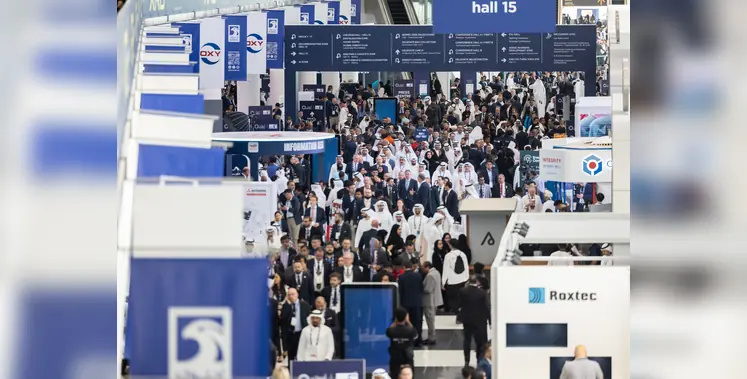
ADIPEC is expected to attract more than 250,000 visitors this year. (Image source: dmg events)
ADIPEC 2026 to bring energy leaders to Abu Dhabi
ADIPEC 2026 will convene the global energy industry in Abu Dhabi as the world enters a new era of rising energy demand, geopolitical volatility, infrastructure constraints and the rapid expansion of artificial intelligence (AI), underscoring the critical importance of energy security to economic stability and growth.
Held under the patronage of His Highness Sheikh Mohamed bin Zayed Al Nahyan, President of the UAE, in his capacity as Ruler of Abu Dhabi, ADIPEC 2026 will take place in Abu Dhabi from 2 to 5 November 2026 at ADNEC Centre Abu Dhabi. The event will mobilise investment in resilient and intelligent energy systems, with confirmed participation from ministers, CEOs and senior leaders across energy, technology, finance and industry.
As the world's largest energy conference and exhibition, and drawing on the UAE’s position as a reliable energy supplier, long-term investment partner and global hub for technology and industry, ADIPEC 2026 will bring together policymakers, producers, investors, technology leaders and customers to turn shared priorities into practical action.
Across its conferences and exhibition, participants will align priorities, advance commercial partnerships and accelerate the projects and solutions needed to support secure, reliable and affordable energy supplies and long-term growth.
Confirmed speakers to date include His Excellency Suhail Mohamed Al Mazrouei, Minister of Energy and Infrastructure, UAE; His Excellency Eng. Karim Badawi, Minister of Petroleum and Mineral Resources, Arab Republic of Egypt; His Excellency Saleh Kharabsheh, Minister of Energy and Mineral Resources, Hashemite Kingdom of Jordan; Rt. Hon Ekperikpe Ekpo, Minister for State for Petroleum Resources (Gas), Nigeria; Wael Sawan, CEO, Shell; Patrick Pouyanne, chairman & CEO, TotalEnergies; Meg O’Neill, CEO, bp; Richard Jackson, president and CEO, Oxy; Claudio Descalzi, CEO, ENI; Christian Bruch, president and CEO, Siemens Energy; Wang Yuetao, chairman, Zhenhua Oil; Olivier Le Peuch, CEO, SLB; Lorenzo Simonelli, chairman and CEO, Baker Hughes; Horacio Marín, chairman of the Board and CEO, YPF; Dr Angela Wilkinson, secretary general and CEO, World Energy Council; Aliko Dangote, President & CEO, Dangote Group; and many more.
Abdulmunim Al Kindy, chairman of ADIPEC 2026, said: “Recent volatility has reaffirmed a simple truth: energy security is economic stability. As demand rises and AI transforms both the energy sector and the economies it powers, the world must invest ahead of demand, diversify supply and strengthen the infrastructure, technology and capabilities that keep energy moving.
“ADIPEC 2026 will focus on what the next energy system needs most: growth, reliability, intelligence and delivery. By bringing together policy, capital, technology and industry in Abu Dhabi, we will help advance the investments, projects and partnerships required to provide more energy, more securely and affordably, while supporting global economic growth.”
ADIPEC’s Strategic Conference has been refreshed around the forces reshaping global energy, from rising demand and energy security to infrastructure, investment, AI, industrial execution and workforce capability.
Across 11 programmes and more than 380 sessions, ministers, CEOs, investors, policymakers and technology leaders will examine the decisions, partnerships and capital needed to expand energy supply, accelerate infrastructure delivery and strengthen long-term system performance.
The Strategic Conference is complemented by the Technical Conference, with its SPE Technical and Downstream Technical programmes, which together represent the world’s largest gathering of technical energy engineers and experts to transform strategy into operational delivery.
More than 2,250 companies already confirmed to participate in the ADIPEC Exhibiton, including 54 NOCs, IOCs, NECs and IECs – across 16 halls and 30 country pavilions. In 2025, the event generated US$53 billion in value through more than 49,000 deals, demonstrating its role in advancing investment, partnerships and project delivery.
Christopher Hudson, President, dmg events, the organisers of ADIPEC, said: “As the global energy landscape continues to evolve, ADIPEC’s role as a platform for dialogue, collaboration and commercial engagement has never been more important. Rising energy demand, supply constraints and rapid technological advancement underscore the need to bring industry leaders together to align priorities, mobilise investment and accelerate the projects and technologies required to support long-term energy security and economic growth.
“The strong early momentum behind ADIPEC 2026 reflects the industry's recognition of both the scale of the opportunity and the urgency for action. By convening policymakers, investors, technology leaders and energy producers in Abu Dhabi, ADIPEC will help strengthen partnerships, advance innovation and support the delivery of the secure, reliable and affordable energy systems the world needs.”
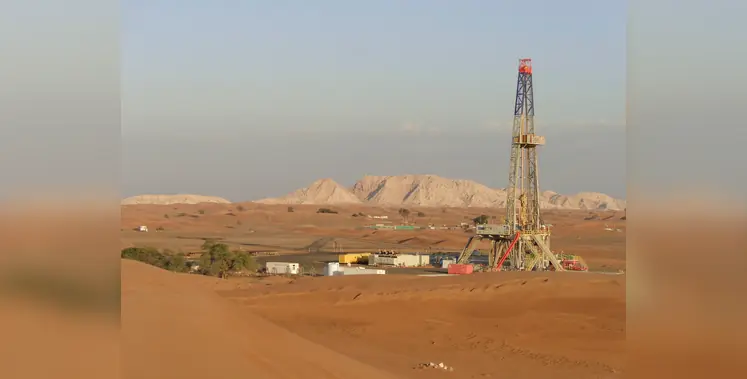
Studies indicate total recoverable resources of up to 43mn barrels of oil. (Image source: Adobe Stock)
OMV announces commercial oil discovery in Libya
OMV has announced that its Essar well in Libya’s Sirte Basin is commercially viable, following the completion of technical and economic studies
The well is in the concession area C 103, where OMV holds a 12% interest.
Zueitina Oil Company will be responsible for developing the field, where studies indicate total recoverable resources of up to 43mn barrels of oil. Due to its proximity to existing production and processing facilities, the field can be developed quickly and brought on stream in a cost-efficient manner, OMV says.
OMV has a long history of exploration and production of oil and gas in North Africa, in close cooperation with local partners, and the region plays an important role in the company’s upstream growth strategy. Libya is a core focus, where the company has been active for around 50 years with a long-standing partnership with the NOC. At the end of 2024, the company resumed exploration activities in Libya after an interruption of more than ten years.
“The Essar discovery is a major milestone for OMV and our partners at the NOC. It confirms not only Libya’s considerable potential, but also the value of long-term partnerships, technical excellence, and our unwavering commitment on the ground. Strategic collaborations such as this are essential to providing the energy the world needs,” said Berislav Gašo, OMV executive vice president Energy.
Strong potential
The recent discovery is good news for Libya, and is a further indication of its energy potential. Libya holds Africa’s largest proven oil reserves and its fifth largest gas reserves. Libya’s oil production currently stands at around 1.4mn bpd, its highest level since 2013. Libya’s NOC is keen to revitalise the country’s oil and gas industry and aims to produce 1.6mn bpd by the end of 2026, rising to 2mn bpd in the medium term, seeing the participation of international companies as crucial to achieving its growth plans. Libya’s efforts to boost oil and gas production following years of civil war have met with considerable success. In recent developments, Eni, in partnership with the Libyan National Oil Corporation (NOC) through the Mellitah Oil & Gas joint venture, has started hydrocarbon production enabled by the Sabratha Compression Project, a strategic offshore development designed to boost gas output from the Bahr Essalam gas field, located around 100 km off the coast.
NOC has signed production sharing agreements recently with Spain’s Repsol, in partnership with the Turkish Petroleum Corporation (TPAO); and Eni, in partnership with QatarEnergy and MOL Group, with its partners, Repsol and Türkiye Petrolleri A. O. (TPAO). Five blocks were recently awarded in Libya’s recent bid round, its first in eighteen years, which attracted significant international interest.
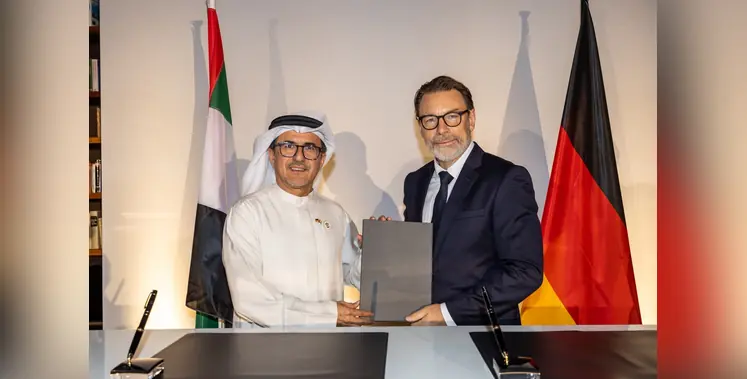
The signing between ADNOC and Bosch. (Image source: ADNOC)
ADNOC, XRG and Masdar strengthen cooperation with German companies
ADNOC, XRG and Masdar have announced agreements with leading German companies, across energy, industry and advanced technology, potentially involving more than €5 billion of investment, combining the UAE’s expertise in energy and capital with Germany’s industrial and technological capabilities
The deals with RWE, Securing Energy for Europe (SEFE), MB Energy, Covestro, Siemens Energy, Siemens Industrial and Bosch Middle East span liquefied natural gas (LNG), gas, renewable energy, advanced materials and technology.
The agreements were signed during the state visit by UAE President His Highness Sheikh Mohamed bin Zayed Al Nahyan to the Federal Republic of Germany, when €40 billion in long-term investment in Germany was announced.
The agreements signed by ADNOC, XRG and Masdar include:
• ADNOC and RWE Supply & Trading GmbH Letter of Intent to progress LNG deliveries into Germany and Europe as well as Asia, supplied from ADNOC Gas’ and XRG’s growing LNG portfolio including Ruwais, Das, Rio Grande, Mozambique and Argentina, with supply commencing in the early 2030s.
• TA’ZIZ and Covestro are looking to progress a world-scale methylene diphenyl diisocyanate (MDI) value chain in Ruwais
• ADNOC, XRG and SEFE signed an agreement to explore cooperation in natural gas and LNG, spanning gas supply, infrastructure, logistics and portfolio optimisation, to support long-term energy security and market development in Europe.
• Covestro, Fertiglobe and MB Energy signed an MoU to collaborate on the development of low-carbon ammonia supply chains into Germany.
• In renewables, Masdar and RWE signed an MoU to consider joint participation in future German offshore wind auctions, while Masdar and Luxcara established a strategic partnership to explore joint investments in offshore wind and battery storage projects in Germany and wider Europe.
• ADNOC also signed Strategic Collaboration Agreements with Bosch Middle East, Siemens Energy and Siemens Industrial to explore collaboration on advanced technology and artificial intelligence.
The agreements build on existing investments by ADNOC, XRG and Masdar across Germany’s energy and industrial base. ADNOC also has 1.6 million tonnes per annum (MTPA) of long-term LNG supply agreements into the German market.
His Excellency Dr. Sultan Ahmed Al Jaber, ADNOC managing director and group CEO, Executive chairman of XRG, and Chairman of Masdar, said, “The UAE and Germany are building on decades of trusted partnership to advance economic growth and shared prosperity for the long-term. The additional €40 billion of intended long-term investments announced this week, together with the agreements ADNOC, XRG and Masdar signed today with our German partners, build on our investments across Germany’s energy and industrial landscape and mark another step forward in greater cooperation that will create new opportunities for both countries.”
In an interview with Bloomberg TV, UAE Minister of Foreign Trade Thani Al Zeyoudi said the €40 billon investment is about “reaffirming the long standing relationship and historical partnership” between the two countries.
“The 40 billion is just the beginning,” Al Zeyoudi said. “We’re going to shop around for the big opportunities that are going to bring this relationship to the next level.”
The UAE and other Gulf states are increasingly looking to broaden defense ties beyond Washington, as the Iran war drags on with no end in sight.
“The conflict is something we’re dealing with,” Al Zeyoudi said. “We’re maneuvering around the challenges and the impacts of the geopolitics and the region.”
The UAE is hoping that, by diversifying its international partners, it can pave the way to securing vital supply chains and potentially attracting production of equipment locally to bypass any export constraints, Bloomberg notes.
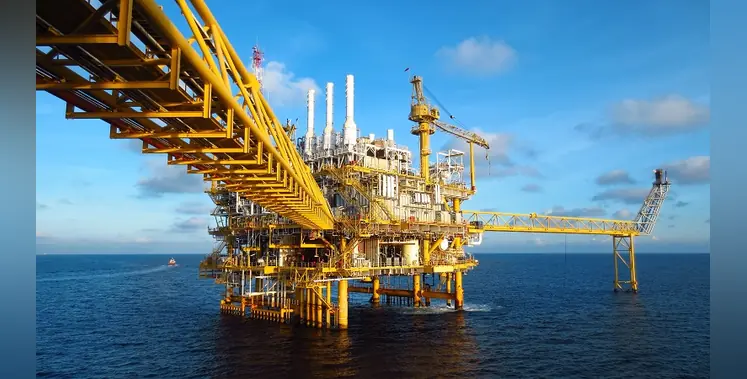
The IEA does not expect a recovery in supplies from the Gulf until next year. (Image source: Adobe Stock)
IEA once again revises down oil supply and demand forecasts
The IEA has once again revised down its oil demand and supply forecasts, as the stalemate in resolving the conflict in the Middle East and renewed attacks in both the Gulf and the Red Sea’s Bab el-Mandeb choke point continue to disrupt oil flows
World oil supply is now projected to average 100.7mn bpd in 2026, down 5.7mn bpd y-o-y, compared with the 4.3mn bpd forecast by the IEA a month ago, with a normalisation of supplies from Middle East producers now not expected until 2027.
Global oil production fell by 1.6mn bpd to 100.1mn bpd in August, as more than 10mn bpd of Gulf output remained shut in. Global oil stocks fell by 3.1mn bpd in August, leaving inventories at their lowest levels since 2023. Tanker costs were also up sharply, reflecting rising security risks and strong demand for ships.
OPEC+ crude production declined by 1.5mn bpd to 33.1mn bpd in August, as losses in Saudi Arabia and Iran outweighed a 980,000 bpd gain from Iraq. However output from some non-OPEC+ producers grew, particularly from the Americas.
Flows through the Strait of Hormuz averaged only 7.6mn bpd in August, 13.1mn bpd below pre-war levels, with cumulative export losses from the waterway approaching 2.8bn barrels.
Saudi Arabia hard hit
Saudi Arabia was particularly hard hit, seeing crude supply falling 2.3mn bpd to 6mn bpd in August, the lowest level in more than three decades, after Houthi-linked attacks on vessels and refineries, while Iran-backed militias in Iraq attacked the Abqaiq processing complex with drone strikes. Saudi Arabia has recently announced that the East-West pipeline has been shut as a precautionary measure, following drone attacks launched from Iraq. It is not known how long it will be until it is operational again. This could lead to a further squeeze on supply, given that the Kingdom had been able to reroute oil exports through the pipeline, which has a 7mn bpd capacity, to avoid the Strait of Hormuz.
Crude oil prices surged in September to their highest level since May, touching US$110 a barrel as hopes for a diplomatic solution to the crisis faded amid renewed attacks. After settling back slightly prices rose again following the attack on the Saudi East-West pipeline. Refined products prices have risen even more sharply, with fuels such as diesel reaching record highs, as both the Middle East conflict and Russia/Ukraine war damages oil refineries. Net diesel and gasoil exports from the Gulf and Russia were 1.6mn barrels a day lower in August than before the Middle East conflict.
Falling oil demand
Oil demand is also falling more than expected, partly due to sharp losses of petrochemical feedstocks and refined product supplies as well as record fuel prices, particularly for diesel, which are forcing consumers to cut their usage.
World oil demand will drop by 2.5mn bpd this year, the IEA predicted, more than its previous forecast of a 1.6mn bpd decline. (This is in contrast to OPEC, which still expects world oil demand to grow this year by 380,000 bpd). China has seen the biggest reduction, with oil imports, refinery activity and product deliveries significantly reduced. Demand reductions have also risen elsewhere, particularly in the Middle East as petrochemical operations and aviation have been impacted. With supplies still constrained, and commercial inventory buffers rapidly depleting, further demand reductions may be required in the coming months to close the gap, the IEA says.
Both the IEA and OPEC expect demand to rise next year; the IEA forecasts demand to rise by 2.6mn bpd in 2027 while OPEC forecasts a rise of 2.36mn bpd.
"Inventories have so far played a crucial role in balancing the market," the IEA said.
"With buffers shrinking and the global refining system stretched to the limit, the need for progress in resolving the conflict in the Middle East – and the Russia-Ukraine war, which is now in its fifth year – is greater than ever to avoid further market tightening."

Autonomous AI review, combined with human-in-the-loop validation, offers a practical pathway to addressing one of the most persistent challenges in project delivery. (Image source: Adobe Stock)
Autonomous AI review to accelerate first production
Wassim Ghadban, global SVP, AI & Digital Engineering at Kent, discusses the concept of autonomous AI-driven review, combined with human-in-the-loop validation, as a means to remove structural bottlenecks in project delivery, and how the convergence of AI capabilities across engineering and operations can enable earlier production, reduce capital inefficiencies, and redefine how projects are executed
In the delivery of energy projects, the industry has long focused on optimising engineering productivity, refining project controls, and improving procurement and construction strategies. Despite these efforts, delays remain a persistent challenge. These delays are often attributed to complexity, uncertainty, or resource constraints. However, a closer examination reveals that the underlying issue is more structural in nature.
Engineering outputs are developed rapidly, supported by sophisticated tools and experienced teams. Yet, the progression of these outputs through the project lifecycle is governed by validation processes that are inherently sequential and fragmented. Documents and models move through multiple layers of review, often across different disciplines, organisations, and geographies. Each step introduces latency, not necessarily because of the effort required, but because of coordination, alignment, and the need to reconcile inconsistencies.
In this context, the constraint is not the ability to produce engineering work, but the ability to validate and integrate it efficiently.
The nature of the bottleneck
As projects evolve from conceptual design to detailed engineering and construction, the volume and granularity of deliverables increase significantly. This expansion is accompanied by a corresponding increase in interfaces between disciplines. Mechanical systems must align with structural supports, electrical systems must integrate with control architectures, and all must comply with operational and safety requirements.
Traditional review processes address this complexity through iterative, discipline-specific validation. While effective in ensuring technical integrity, these processes are limited in their ability to scale. Reviews are conducted sequentially or in loosely coordinated parallel streams, and issues identified at later stages often require revisiting earlier decisions. The result is a cycle of iteration that extends project timelines and introduces inefficiencies.
This dynamic is further compounded by the fact that review cycles are not purely technical activities. They involve communication, coordination, and decision-making across multiple stakeholders. As such, the duration of a review cycle is often driven more by process than by technical effort.
The emergence of AI in engineering contexts
Advances in AI have reached a level of maturity that allows systems to interpret, analyse, and generate engineering content with increasing accuracy. AI models can process structured and unstructured data, identify relationships between elements, and detect patterns that may not be immediately visible to human reviewers.
In practical terms, AI can now extract information from engineering documents, generate drawings based on defined parameters, and evaluate the consistency of designs across multiple domains. It can compare specifications against standards, identify deviations, and highlight potential conflicts between systems.
These capabilities extend beyond isolated tasks. AI can operate across interconnected datasets, enabling a more integrated view of engineering systems. This creates the foundation for a new approach to validation, one that is not constrained by discipline boundaries or sequential workflows.
Autonomous review with human-in-the-loop validation
The concept of autonomous AI review builds on these capabilities by applying them to the validation process itself. Rather than relying on multiple rounds of manual review, AI systems can evaluate entire engineering packages in a single pass, checking for completeness, compliance, and cross-discipline consistency.
Crucially, this approach does not eliminate the role of the engineer. Instead, it redefines it. Engineers remain responsible for final validation and decision-making, but their role shifts from conducting detailed manual reviews to assessing and confirming the outputs generated by AI. This human-in-the-loop model ensures that accountability and professional judgment are preserved, while significantly reducing the time required for validation.
The impact of this shift is not limited to efficiency. By enabling rapid, comprehensive review, it reduces the likelihood of late-stage issue discovery. Inconsistencies and conflicts can be identified earlier, when they are less costly and easier to resolve.
Implications for project execution
The introduction of autonomous review has broader implications for how projects are executed. By reducing the duration and frequency of review cycles, it allows engineering activities to progress more continuously. Dependencies between disciplines become less restrictive, as validation can occur in parallel rather than in sequence.
This creates the conditions for a more dynamic and responsive execution model. Decisions can be made earlier, with greater confidence, and adjustments can be implemented without significant disruption.
The traditional concept of rigid stage gates begins to give way to a more fluid process, in which validation is embedded within the workflow rather than applied after the fact.
The cumulative effect is a compression of the project timeline. Engineering completion is achieved sooner, procurement can be initiated earlier, and construction activities can proceed with fewer interruptions.
Enabling earlier production
For owner-operators, the most significant consequence of this transformation is the potential to achieve first production earlier than originally planned. The value of this acceleration extends beyond cost savings. It directly impacts revenue generation and the overall economic performance of the asset.
By reducing delays in engineering and execution, autonomous review contributes to a more predictable and shorter path to operational readiness. This not only improves capital efficiency but also enhances the strategic flexibility of operators, allowing them to respond more effectively to market conditions.
In this sense, the primary value of AI in project delivery is not merely in reducing costs, but in unlocking time. Time, in turn, is directly linked to value creation in the form of earlier production and extended asset utilisation.
Extending AI into operations
The same principles that enable autonomous review can be extended into the operational phase. AI systems are increasingly capable of monitoring plant conditions, interpreting sensor data, and applying predefined operational philosophies to optimise performance.
In environments where safety, efficiency, and reliability are critical, AI can support or even execute operational decisions within defined boundaries. This reduces the reliance on manual intervention and enhances the consistency of operations.
In certain scenarios, AI can effectively operate a plant by following established control strategies and responding to real-time conditions. While human oversight remains essential, the role of operators evolves toward supervision and exception management.
Conclusion
Autonomous AI review, combined with human-in-the-loop validation, offers a practical pathway to addressing one of the most persistent challenges in project delivery. By transforming how engineering outputs are validated and integrated, it removes a key constraint that has historically limited project performance.
The resulting benefits extend beyond efficiency gains. They include earlier production, improved capital utilisation, and a more responsive and resilient execution model. When combined with AI-enabled operations, this approach forms the foundation of a new paradigm in which projects are not only digitally enabled but increasingly autonomous.
The future of project delivery will not be defined by how quickly engineering work can be produced, but by how effectively it can be validated, integrated, and executed. In this context, AI is not simply a tool for optimisation, but a catalyst for fundamental change.
Offshore Technology Conference (OTC 2023)
Venue:
NRG Park
Houston
Texas
Dates:
1-4 May 2023
Website:
2023.otcnet.org
