



cc.web.local

twitter linkedinfacebookacp contact us

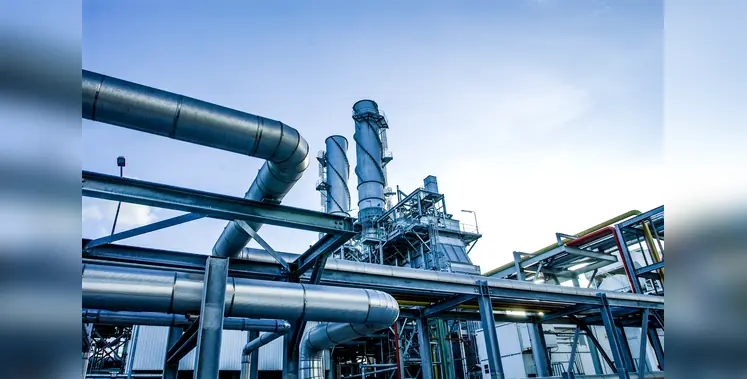
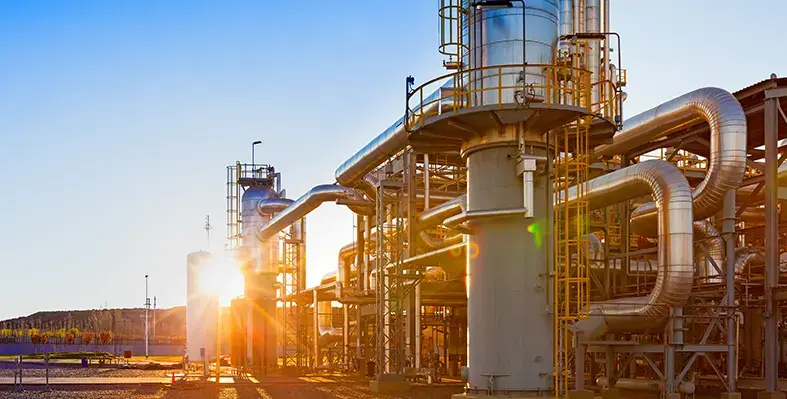
Demand could also drop in markets that have so far weathered the crisis. (Image source: Adobe Stock)

Refined product markets have crossed a critical threshold where a historic supply disruption is evolving into an outright demand crisis, according to a new analysis by S&P Global Energy

Markets are now facing a severe demand reckoning that will likely last through the summer travel season, and possibly longer.

“Given the lags between any potential restart of flows through the Strait of Hormuz and the arrival of meaningful relief to product supply, the market equation cannot be solved without demand acting as the balancer,” stated Daniel Evans, vice president and global head of fuels and refining research at S&P Global Energy.

S&P Global Energy now expects global refinery runs to decline 5.2mn bpd and 2.7mn bpd year over year in the second and third quarters, respectively. On an annual average basis, global crude runs are now expected to decline by 1.9mn bpd.

The magnitude of losses in refinery runs are expected to be largely mirrored in refined product demand reductions, with year-over-year declines of 4.4mn bpd and 2.2mn bpd in the second and third quarters, respectively. That constitutes a decline of 1.8mn bpd in 2026, on an annual average basis.

The effective closure of the Strait of Hormuz is most likely to continue through May before a gradual return of oil flows. The demand decline in the second quarter is more than twice that experienced during the weakest quarter of the ‘Great Recession’ of 2008/2009. The Hormuz crisis is now a prolonged event with lasting physical consequences. Even if flows restarted immediately, operational and logistical delays would postpone meaningful relief to product markets by months rather than weeks.

“What matters now is the ‘call on demand curtailment’ — the volume of consumption that must disappear given fixed supply constraints and limited inventory draw capacity,” asserted Karim Fawaz, executive director of fuels and refining at S&P Global Energy.

The bulk of refinery run cuts outside of the Middle East are expected to come from Asia and to a lesser extent Europe, where exposure to disrupted flows is greatest and competition for replacement barrels is most intense. As refinery runs fall, so will refined product supply, creating pressure in both refining regions and those dependent on imports.

For the time being, North American, Latin American and African refineries are relatively better positioned and remain well insulated from the crude supply crisis. However, the burden of demand losses may spread across markets that have so far weathered the crisis unless the geopolitical tension eases.
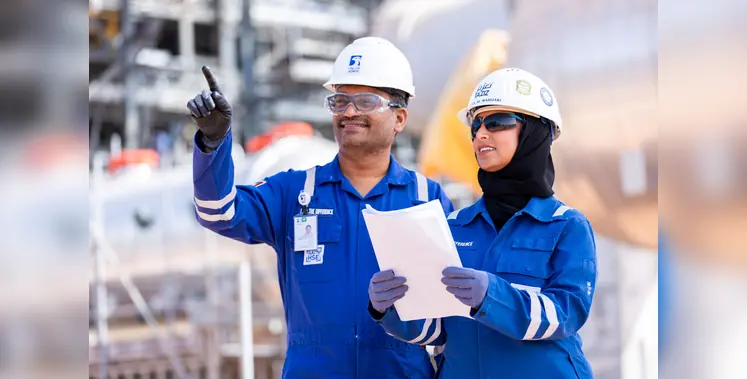
The agreements will expand the chemicals ecosystem. (Image source: ADNOC)

TA’ZIZ, a joint venture between ADNOC and ADQ, has signed long-term agreements spanning offtake, feedstock and sales across its chemicals portfolio, valued at US$28.5bn (AED104.6bn)

Signed at the Make it in the Emirates Forum, the agreements, valued at US$28.5bn, secure both global offtake and reliable local feedstocks, allowing for large-scale chemical production within the UAE and reinforcing TA’ZIZ’s role in building a fully integrated domestic chemicals ecosystem. The deals include sale agreements with ADNOC and Proman for methanol; Emirates Global Aluminium (EGA) for caustic soda; Mitsubishi Corporation for ethylene dichloride (EDC), vinyl chloride monomer (VCM) and caustic soda; Mitsui & Co. for EDC and caustic soda; Sanmar Group for EDC and VCM; Tricon for PVC, EDC and caustic soda; and Vinmar for EDC and polyvinyl chloride (PVC).

ADNOC Gas secured a 25-year feedstock agreement to supply natural gas to the TA'ZIZ methanol project valued at over $5 billion (AED18.4 billion). TA’ZIZ also agreed a 20 year salt supply agreement with Abu Dhabi based Sama Salt to support production at its PVC complex.

Mashal Saoud Al-Kindi, CEO of TA’ZIZ, said, “These long term agreements represent a defining milestone for TA’ZIZ and for the UAE’s industrial growth ambitions. By securing both global demand and reliable local feedstock, we are translating vision into delivery, anchoring world scale chemicals production, strengthening domestic value chains and creating enduring economic value, jobs and supply chain resilience for the UAE.”

Together, these agreements leverage local resources to secure a reliable and sustainable supply of critical raw materials, further strengthening domestic value chains and advancing the UAE’s industrial self sufficiency.

TA’ZIZ is a manufacturing, industrial services, logistics and utilities ecosystem that enables the production of transition fuels and new products across the chemicals value chain, supporting ADNOC’s ambition to become a top three global chemicals player as well as the UAE’s industrial development and economic diversification ambitions.

The TA’ZIZ Industrial Chemicals Zone is set to produce 4.7 million tonnes per annum (mtpa) of chemicals once construction is completed in 2028. This includes a 1 mtpa ammonia plant, a 1.8 mtpa methanol plant and 1.9 mtpa of marketable products from its integrated polyvinyl chloride (PVC) complex. The PVC complex, which produces PVC, ethylene dichloride (EDC), vinyl chloride monomer (VCM), and caustic soda, will be one of the world’s top three largest single site PVC complexes.

Also at the Make it at the Emirates Forum, TA’ZIZ and Alpha Dhabi Holding announced a strategic collaboration agreement for around US$10 bn (AED36.7bn) in capital investment in new industrial chemicals in the TA’ZIZ industrial chemicals ecosystem in Al Ruwais Industrial City, Al Dhafra region of Abu Dhabi.

The partnership could produce up to 14 new chemicals, delivering around 2.2mn tonnes per annum (mtpa) of additional chemical capacity in the TA’ZIZ industrial chemicals ecosystem in Al Ruwais Industrial City. The new chemicals, which include styrene and polystyrenes, acrylic acid and derivates, polyols, MDI, epoxy resins and linear alpha-olefins, are based on domestic demand and could substitute key products currently imported into the UAE, while strengthening local supply chain resilience. The partnership supports the UAE’s national industrial priorities, including the Make it in the Emirates (MIITE) initiative and the country’s industrial strategy, by strengthening domestic manufacturing capability and advancing self-sufficiency in strategically important chemical products.

Vitol Bahrain EC has a long-standing presence in Uganda's downstream sector.

As the Uganda National Oil Company aims to build a crude refinery, it has reached out to a unit of global commodities trader, Vitol, for a US$2bn loan to support the project alongside construction and infrastructure developments

According to Henry Musasizi, Uganda's junior finance minister, this seven-year tenor loan from Vitol Bahrain EC (VBA) comes with an interest rate of 4.92%. The minister worked on advancing the approval process for the credit line and the loan, which involved significant lawmakers, who sanctioned the development with a majority verdict.

Musasizi said that Vitol's support "presents an opportunity to access non-traditional financing to implement. ..projects and support the government in developing national infrastructure."  

Vitol Bahrain EC has a long-standing presence in Uganda's downstream sector, functioning as the sole supplier of refined petroleum products to UNOC, before the state-owned company sells it to retailers across the country.

Alongside the refinery, the loan amount will also be covering road construction, a petroleum products storage terminal and extension of a petroleum pipeline from western Kenya to Uganda's capital Kampala.

Previously, the UNOC also concluded a deal with the UAE-based Alpha MBM Investments, whereby a domestic refinery with a capacity of 60,000 barrels per day is in the pipeline. The agreement accords 60% stake on the refinery to the UAE firm while UNOC retains 40%.

Uganda is looking to begin commercial oil generation starting next year from fields in its west.

The companies will explore capital investments to upgrade and diversify production. (Image source: Adobe Stock)

ExxonMobil, Aramco and Samref have signed an agreement to look at a significant upgrade of the Samref refinery, in Yanbu, and the possibility of expanding it into an integrated petrochemical complex

The refinery currently has the capacity to process more than 400,000 barrels of crude oil per day, producing a diverse range of energy products including propane, automotive diesel oil, marine heavy fuel oil, and sulphur. The companies will explore capital investments to upgrade and diversify production, including high-quality distillates that result in lower emissions and high-performance chemicals, as well as ways to improve the refinery’s energy efficiency and reduce emissions from operations through an integrated emissions-reduction strategy.

The companies will commence a preliminary front-end engineering and design phase for the proposed project, which would aim to maximise operational advantages, enhance Samref’s competitiveness and help to meet growing demand for high-quality petrochemical products in the Kingdom.

Samref is a joint venture between Aramco and Mobil Yanbu Refining Company Inc., a wholly owned subsidiary of Exxon Mobil Corporation.

Mohammed Y. Al Qahtani, Aramco Downstream president, said, “This next phase of Samref marks a step in our long-term strategic collaboration with ExxonMobil. Designed to increase the conversion of crude oil and petroleum liquids into high-value chemicals, this project reinforces our commitment to advancing Downstream value creation and our liquids-to-chemicals strategy. It will also position Samref as a key driver in the growth of the Kingdom’s petrochemical sector.”

Jack Williams, Exxon Mobil Corporation senior vice president, added, “We value our partnership with Aramco and our long history in Saudi Arabia. We look forward to evaluating this project, which aligns with our strategy to focus on investments that allow us to grow high-value products that meet society’s evolving energy needs and contribute to a lower-emission future.”

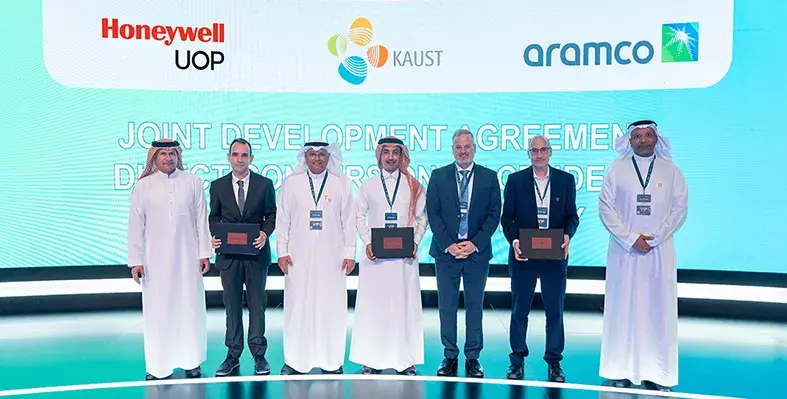
The new collaboration aims to scale up the development of CTC technology. (Image source: KAUST)

Aramco, Honeywell and King Abdullah University of Science and Technology (KAUST) are collaborating to scale up the development of Crude-to-Chemicals (CTC) technology in a bid to maximise the value of crude oil and reduce costs associated with CTC conversion 

The new CTC pathway will entail converting crude oil directly into light olefins and other high-demand chemicals, resulting in improved fuel efficiency, carbon utilisation, and process economics—allowing for more efficient and cost-effective production at scale.

The collaboration aligns with Saudi Arabia’s Vision 2030 by helping to advance economic diversification, build national research and technology capabilities, and strengthen the Kingdom’s position in the global chemicals market, combining academia and industry expertise to accelerate technology development and national capabilities.

Dr. Ali A. Al-Meshari, Aramco senior vice president of technology oversight & coordination, said, “This collaboration with Honeywell UOP and KAUST furthers Aramco's efforts to drive innovation and shape the future of petrochemicals. By harnessing the power of cutting-edge technologies, we aim to enhance energy efficiency and unlock increased value from every barrel of crude. This novel Crude-to-Chemicals process is aligned with our vision of supporting the global transition towards cleaner, high-performance chemical production. Moreover, this initiative demonstrates our focus on contributing to the growth of a vibrant ecosystem, where the deployment of innovative technologies can create lasting value for our stakeholders, our communities, and the environment.”

Rajesh Gattupalli, Honeywell UOP president, added, “This agreement marks a defining moment in our strategic collaboration with Aramco and KAUST – and in the global evolution of Crude-to-Chemicals technology. With Honeywell UOP’s deep expertise in catalytic process design and commercial scale-up, we’re well positioned to drive this innovation forward.”

More Articles …