





cb.web.local

twitter linkedinfacebookacp contact us

Exploration & Production

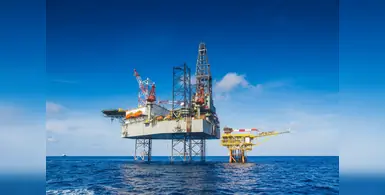
Kuwait's offshore exploration programme is yielding results. (Image source: Adobe Stock)

Kuwait Oil Company (KOC) has announced a new discovery in the Al-Jazah offshore natural gas field

According to a KOC statement, the initial exploration well recorded the highest production rate from a vertical well in the Minagish formation in Kuwait’s history.
Initial tests at the Jazah-1 well indicate production exceeding 29 million cubic feet per day (mcf/d) of natural gas and more than 5,000 barrels a day of condensate, according to the statement.

With an area estimated at around 40 sq. km, the field is estimated to hold potential reserves of around one trillion cubic feet (tcf) of gas and more than 120 mn barrels of condensate, which may be revised upwards with further exploration in surrounding areas.

KOC said the reservoir has low CO2, no hydrogen sulfide and no associated water.

The new discovery follows other offshore discoveries including the Nokhatha field discovery last year, which is estimated at about 2.1bn barrels of oil and 5.1 trillion cubic feet of gas, and the Julaiah field early this year, described by KOC CEO Ahmad Jaber Al Eidan as a “strategic breakthrough.”

This is a result of KOC’s push to develop its offshore resources as it seeks to boost gas output and reduce its dependence on imported LNG. Phase 1 of its offshore exploration programme, consisting of the drilling of six wells, is underway, with planning for Phase Il also underway, with nine additional locations identified for further exploration and appraisal, according to Al Eidan.

Kuwait is the fifth-largest producer in OPEC, currently producing approximately 2.7mn bpd of oil, with plans to increase its production capacity to 4mn bpd by 2035. Al Eidan commented in an earlier interview with Oil Review Middle East, “Our strategy focuses on optimising production from mature assets, accelerating the development of high-potential reservoirs, and unlocking new growth frontiers, both onshore and offshore, to ensure sustainable and resilient capacity growth.”

He said the new offshore discoveries “significantly expand Kuwait's hydrocarbon frontier beyond the onshore legacy and add a new dimension to our long-term production sustainability,” adding that offshore development will play an increasingly vital role in KOC’s production mix in the coming decade.

The North Cleopatra block is located offshore Egypt. (Image source: QatarEnergy)

Establishing further presence beyond the North El-Dabaa block in the Arab Republic of Egypt, QatarEnergy will be acquiring a 27% interest in the North Cleopatra block as well

As the energy major from the Middle East signed an agreement with Shell, shares on the block currently stands at 36% participating interest for Shell as operator, followed by Chevron (27%) and Tharwa Petroleum Company (10%).

Commenting on the agreement, Saad Sherida Al-Kaabi, the Minister of State for Energy Affairs, the president and CEO of QatarEnergy, said, “We are pleased to secure this additional exploration acreage, which further expands our upstream exploration activities in the Arab Republic of Egypt.”

“We would like to take this opportunity to thank the Egyptian Ministry of Petroleum and Mineral Resources, and our partners in the block for their valued support and cooperation. We look forward to working together and delivering our exploration objectives,” he added. 

The North Cleopatra block is located offshore Egypt in the frontier Herodotus basin and is north and adjacent to the North El-Dabaa block, where QatarEnergy holds a 23% participating Interest. The North Cleopatra block covers an area of over 3,400 square kilometers in water depths of up to 2,600 meters.

The system will be deployed for the first time in Egypt. (Image source: STRYDE)

Egypt’s oil and gas exploration capabilities are taking a step forward with the first-ever deployment of cutting-edge nodal technology for onshore seismic acquisition

Leading exploration services company ARGAS has purchased 30,000 Range+ STRYDE nodes and STRYDE’s Nimble Seismic System. These will be deployed on a very large 2D seismic survey in Egypt to acquire high-quality seismic data across highly prospective sedimentary basins, supporting oil and gas exploration efforts in one of Egypt’s most promising frontier regions.

The ultra-lightweight Range+ nodes, coupled with a state-of-the-art, high-capacity charging, harvesting, and QC ecosystem, enable thousands of nodes to be rotated daily.This ensures faster acquisition cycles and rapid delivery of high-quality seismic data, giving ARGAS a competitive edge in Egypt’s rapidly evolving energy sector.

“After working with STRYDE’s system on previous projects, it became clear that this technology brings a significant advantage to both us and our clients,” said Soufiane Azzi, Director of Commercials and Collaborations of ARGAS. “The system has proven to drastically reduce deployment time, reduce headcount and vehicles count, simplifies logistics, improve recording time window, and delivers excellent seismic data. We are proud to be the first to bring node technology to Egypt.”

“This is a major milestone, not only for STRYDE and ARGAS, but for Egypt’s energy sector as a whole,” said Mehdi Tascher, sales director at STRYDE.“ARGAS’s purchase is spot on, and reflects the growing demand for scalable and efficient seismic acquisition systems that enable high-density data capture for superior subsurface imaging, empowering more confident and informed exploration decisions.”

Declines rates are lower in the Middle East than elsewhere. (Image source: Adobe Stock)

Declines in output from existing oil and gas fields globally have accelerated – largely due to a higher reliance on shale and deep offshore resources – but are lower in the Middle East than other parts of the world, according to a new report from the IEA

The new report, 'The Implications of Oil and Gas Field Decline Rates', draws on production data from around 15,000 oil and gas fields from around the world, and highlights the wide variation in decline rates across field types and geographies, with production from larger fields declining more slowly than from smaller fields, and offshore fields declining more quickly than onshore fields. The declines rates for the Middle East and Russia, which are home to the majority of conventional onshore supergiant fields, are therefore much lower than those elsewhere. This could mean that oil production from existing fields would become more concentrated among the OPEC member countries and Russia, who could see their share of global oil production rise from 43% today to 53% in 2035 and more than 65% in 2050, according to the IEA.

In Saudi Arabia and the UAE, where major upstream expansion projects are underway, production growth from approved projects, along with existing spare capacity and continued investment in existing projects, can more than offset the loss of production from natural declines, especially as decline rates are relatively low in both countries.

Onshore supergiant oil fields in the Middle East decline at less than 2% per year, while smaller offshore fields in Europe average more than 15% per year, according to the report. Tight oil and shale gas decline even more steeply: without investment, output falls by more than 35% over one year and a further 15% over a second year. The Middle East has the lowest oil post-peak decline rate at 1.8%, compared with global average annual post-peak decline rate of 5.6% for conventional oil and 6.8% for conventional natural gas.

IEA executive director Fatih Birol noted that nearly 90% of upstream investment annually is dedicated to offsetting losses of supply at existing fields. “Decline rates are the elephant in the room for any discussion of investment needs in oil and gas, and our new analysis shows that they have accelerated in recent years. In the case of oil, an absence of upstream investment would remove the equivalent of Brazil and Norway’s combined production each year from the global market balance. The situation means that the industry has to run much faster just to stand still. And careful attention needs to be paid to the potential consequences for market balances, energy security and emissions.”

The development of new resources would therefore be need to keep up the level of global oil and gas production. Even with continued spending on existing fields, more than 45mn bpd of oil and nearly 2,000 bcm of gas from new conventional fields would be required by 2050 to maintain production at today’s levels, according to the IEA.

The report also highlights that it has taken almost 20 years on average to move from issuing an exploration licence for oil and gas until first production. Around 230 billion barrels of oil and 40 trillion cubic metres (tcm) of gas resources have been discovered that have yet to be approved for development, mainly in the Middle East, Eurasia, and Africa. Developing these resources could add around 28 mn bpd and 1,300 bcm by 2050, the IEA says.

Global shale oil and gas production is set to rise. (Image source: Adobe Stock)

Global shale oil and gas production is set to increase, with Saudi Arabia and Algeria among those countries in the region looking to exploit their shale gas reserves

According to a recent report from leading data and analytics company titled Global Data titled  “Emerging Oil and Gas Shale Plays", notable increases in production are expected over the next few years, including the USA, the current leading producer. These are driven by technological advancements and significant discoveries in countries such as China, Argentina, and Saudi Arabia. GlobalData’s Strategic Intelligence report titled “Emerging Oil and Gas Shale Plays”, reveals that the US was the undisputed leader in global shale oil and gas production with over 80% share in 2024, thanks to its vast reserves, advanced extraction technologies, and supportive regulatory environment.

Ravindra Puranik, Oil and Gas Analyst at GlobalData, commented, “The combination of hydraulic fracturing and horizontal drilling has unlocked unprecedented volumes of shale resources, particularly in formations like the Permian Basin, the Eagle Ford, and the Marcellus Shale. The growth of the shale industry has bolstered the US energy independence, reducing reliance on foreign oil and altering the country's geopolitical strategy.”

Canada holds the second-largest recoverable reserves of shale oil and gas after the USA. It is also ranked second in production due to the technological similarities with its neighbour and government encouragement for unconventional hydrocarbon development.

Argentina is another emerging hotspot for shale oil and gas, particularly the Vaca Muerta formation, which is characterised by strategic asset management by YPF, significant infrastructure investment, and robust growth in production and exports.

Recently, China has made significant progress in shale oil exploration, which could enhance its energy security and reduce dependency on foreign oil supplies, while Saudi Arabia is exploring gas shales within its northern and eastern regions, targeting a 60% rise in its gas output from 2021 to 2030. The focus of development is its giant Jafurah unconventional gas field, the largest liquid-rich shale play in the MIddle East, estimated to hold more than 200 trillion cubic feet of raw gas, which is set to commence production this year.

Algeria, which has significant proven shale gas reserves, is reported to be negotiating with the USA’s ExxonMobil and Chevron, global leaders in shale production, on an agreement that would allow them to explore and develop Algeria's natural gas reserves, including its shale gas reserves. Algeria is seeking to revive its flagging oil and gas sector, on which its economy is heavily dependent, and boost gas exports, with an eye on Europe as it seeks alternative suppliers to Russian pipeline gas.

Puranik said, “The future of shale oil and gas will be shaped by a delicate balance between technological innovation, cost efficiency, and environmental stewardship. Countries that can align production growth with carbon management and energy transition goals will not only secure domestic energy resilience but also strengthen their position in an increasingly competitive and sustainability-driven global market.”

More Articles …